
Jaca – A guide to the historic capital of Aragón
Jaca, the first capital of Aragón, sits at the foothills of the Pyrenees and is one of the main gateways to the mountains. With its lively old town, rich history and excellent restaurants and tapas bars, it’s a popular base for visitors exploring the Pyrenees.
Although small enough to explore easily on foot, Jaca offers plenty to see. The town has a good selection of outdoor shops, cafés and restaurants, making it a convenient stop if you need to pick up hiking gear or simply relax after a day in the mountains.
But what really gives Jaca its charm is the historic old town — a maze of attractive streets, historic buildings and lively squares. It’s the perfect place to spend a relaxed afternoon wandering through the town’s history while stopping regularly for tapas and a glass of wine.
Among the main highlights are the Romanesque cathedral, the impressive 16th-century citadel, the Clock Tower, and several small museums that tell the story of Aragón’s early history.
Early History
Jaca has been inhabited since at least the 3rd century BC, but its importance grew dramatically during the Middle Ages.
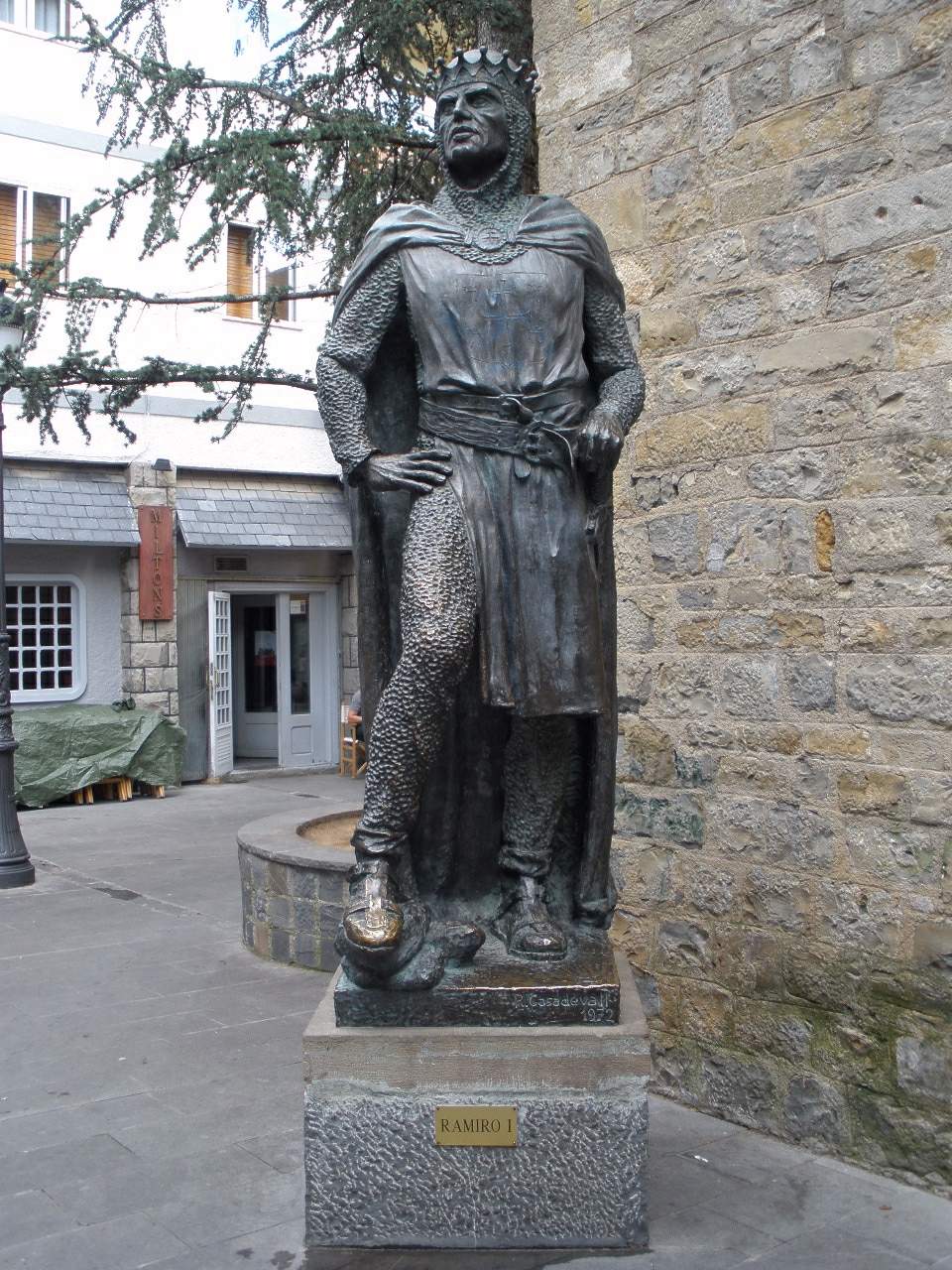
In 1035 Ramiro I, the first King of Aragón, made Jaca the capital of his newly formed kingdom. The name Aragón itself comes from the River Aragón, which flows down the Canfranc Valley north of Jaca before continuing south.
Under Ramiro I and his successors, the small kingdom gradually expanded through military victories against both Muslim territories and neighbouring Christian kingdoms. As Aragón grew in power, Jaca flourished as an important political and religious centre.
During the reign of Ramiro’s son, Sancho Ramírez, the town received a royal charter in 1077 that allowed weekly markets and encouraged trade. The construction of the cathedral began during this period, and the seat of the Bishop of Aragón was moved to the city. Defensive walls were built around the town and Jaca quickly attracted new settlers and merchants.
Jaca’s time as capital ended in 1096 after the Christian reconquest of Huesca, when the royal court moved to the larger city. In the following centuries Aragón’s political centre shifted further south to Zaragoza.
The Cathedral of Jaca

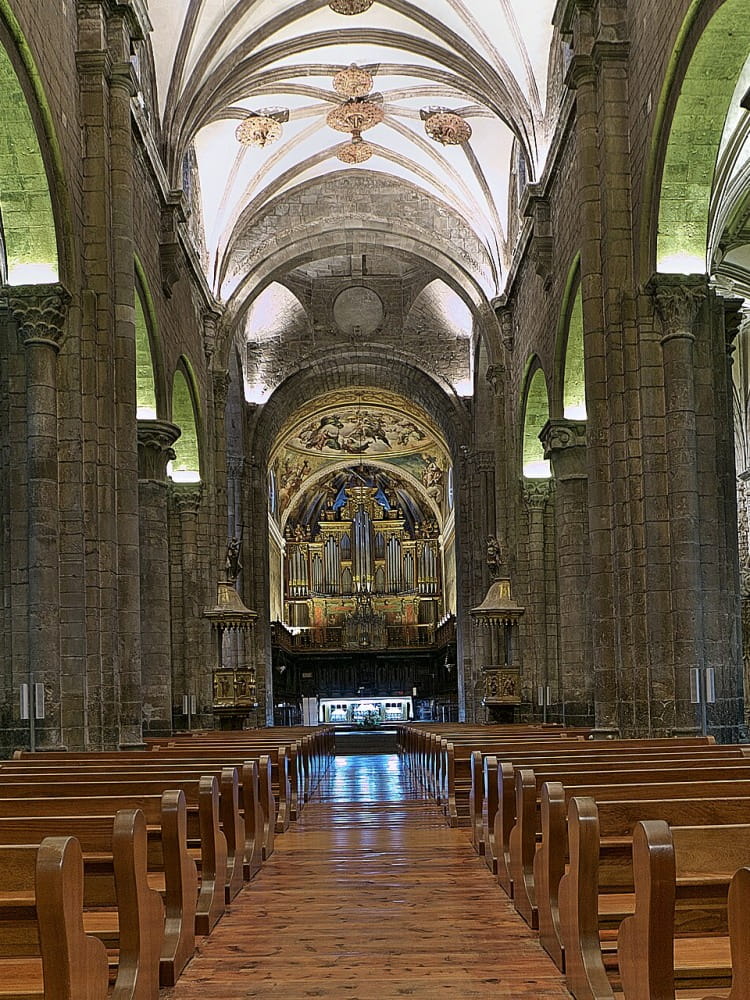
The Cathedral of San Pedro de Jaca is one of the most important Romanesque monuments in Spain and is widely considered the first Romanesque cathedral built in the country.
Construction began in 1077 during the reign of Sancho Ramírez and continued into the early 12th century. Despite later alterations and restorations, the building still preserves its original Romanesque layout.
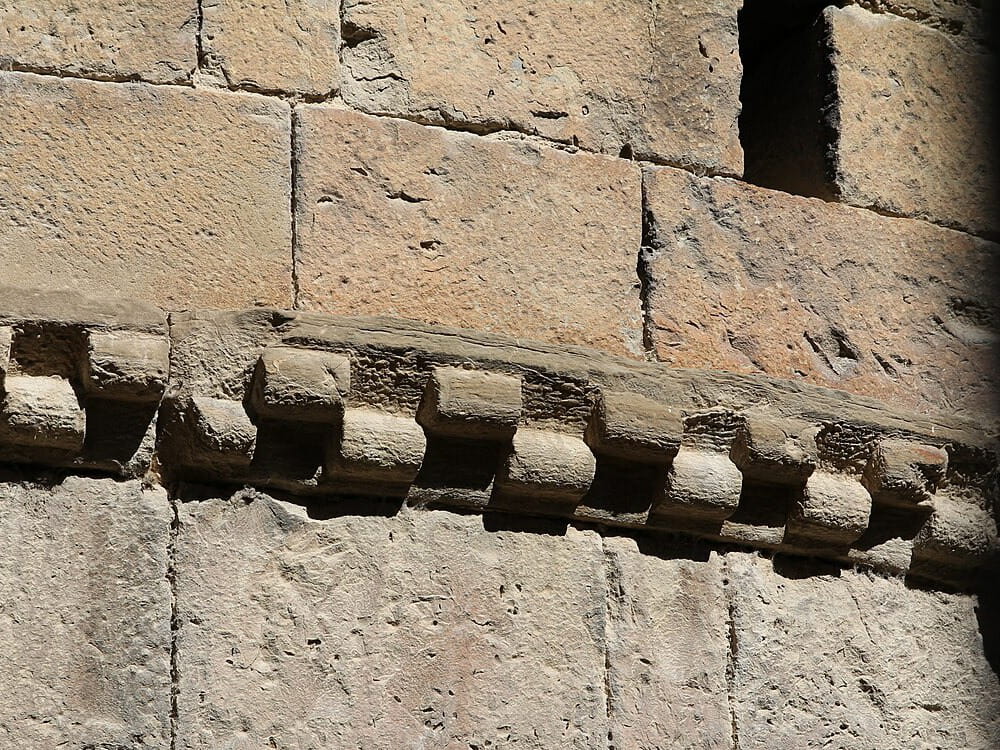
One of the cathedral’s most distinctive features is the decorative stone pattern known as the “ajedrezado jaqués” — a chessboard-like design that later spread along the Camino de Santiago as pilgrims travelled west towards Santiago de Compostela.
Inside, the cathedral follows a basilica plan with three naves. The central nave is higher than the side aisles and is separated by alternating columns and cruciform pillars topped with beautifully carved Romanesque capitals.
One particularly interesting corner of the cathedral is the Chapel of Santa Orosia, the patron saint of Jaca. According to legend, this Christian noblewoman was executed in the 8th century after refusing to marry a Muslim prince. Her story is illustrated in a series of striking paintings in the chapel.
Visiting information
The cathedral is usually open daily and is easy to visit while exploring the old town.
Entry to the cathedral itself is free, although access to the interior lighting sometimes requires a small coin donation.
Diocesan Museum of Religious Art
Located in the cathedral cloister, the Diocesan Museum of Jaca holds one of the finest collections of Romanesque art in Spain.
The museum displays medieval paintings, sculptures and frescoes that were rescued from churches across the region. Many small mountain villages were gradually abandoned during the 20th century, and their churches could no longer be maintained. To preserve these artworks, the frescoes were carefully removed and brought to the museum.
The collection focuses mainly on Romanesque art but also includes Gothic, Renaissance and Baroque pieces. The museum has been extensively renovated in recent years and is beautifully presented, offering an excellent introduction to the art and culture of medieval Aragón.

The Citadel of Jaca
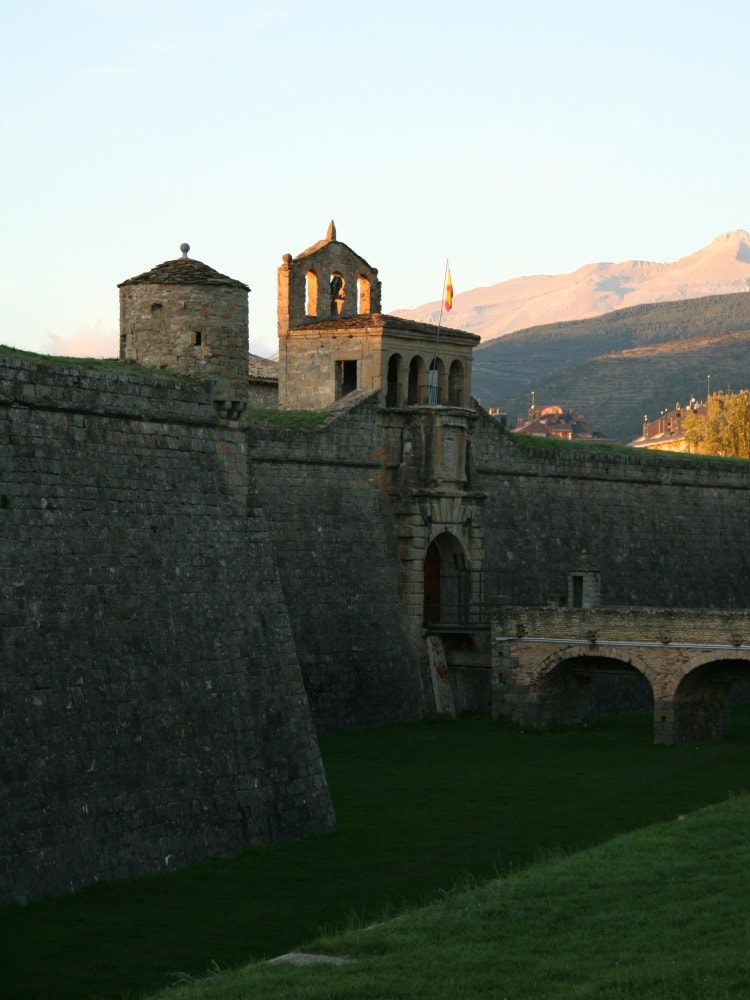
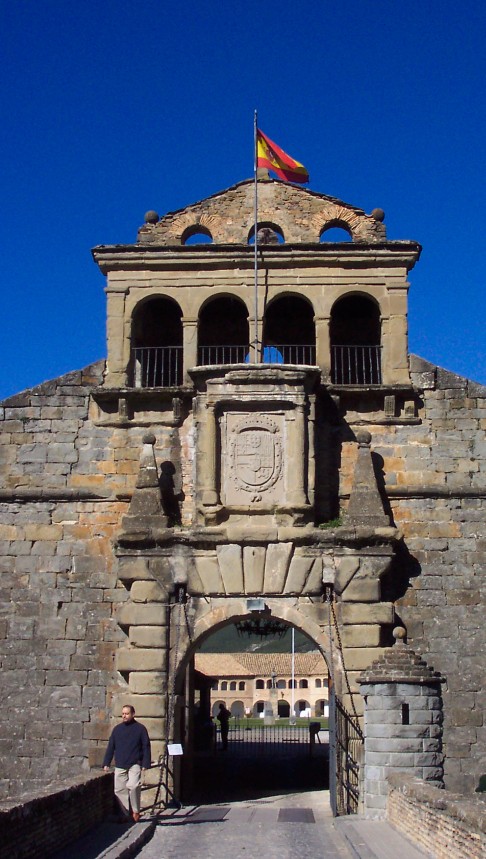
One of the most striking landmarks in the town is the Citadel of Jaca, also known as the Castle of San Pedro.
This impressive pentagonal fortress was built in the late 16th century during the reign of Philip II. It was designed to defend the northern frontier of Spain and was one of the first fortifications in the country built specifically to resist cannon fire, with thick low walls and angled bastions.
The citadel remains remarkably well preserved, complete with moat, barracks, bastions and drawbridge.
Today visitors can walk around the park surrounding the fortress, where deer now live peacefully in the moat — a curious and rather charming sight in the middle of the town.
Inside the citadel you’ll also find the Museum of Military Miniatures, which displays over 30,000 miniature figures representing historic battles and military scenes from ancient Egypt to the modern era.
The Clock Tower
Another historic landmark in the old town is the Clock Tower, also known as the Prison Tower.
Built in the mid-15th century, the four-storey Gothic tower originally served as the town prison. After the town council purchased the building in the 16th century, it was later used to house the city’s bells.
Although the tower cannot be visited inside, it stands in one of the most attractive corners of the old town. Nearby you’ll find a statue of King Ramiro I and a small square surrounded by cafés and restaurants with outdoor terraces — a lovely place to pause during a stroll through the town.
Jaca has much more to offer than its historic monuments. Throughout the year the town hosts festivals, markets and cultural events, and its lively atmosphere makes it a favourite stop for travellers heading into the Pyrenees.
Whether you’re exploring the mountains nearby or following the Camino de Santiago, Jaca is a wonderful place to slow down, enjoy some excellent food and discover a fascinating piece of Aragón’s history.
Ciudadela de Jaca
Cathedral
Clock tower
The latest news from our blog

Snowshoeing in the sunshine!
A memorable week of snowshoeing in the Pyrenees. After bad weather for most of the winter, our group hit lucky with wall to wall sunshine this week! Routes explored Canal Roya, Ibón de Estanés and the mountains around Portalet, with Pablo and David guiding the group a…

What do we do in winter?
Winter in the Pyrenees is far from quiet. From snowshoe guiding and avalanche training to route planning and designing new itineraries, discover what the Hike Pyrenees team does behind the scenes.

Breaking news: We’ve won a Feefo Gold Trusted Service Award!
We’re proud to share that we’ve been awarded the Feefo Gold Trusted Service Award for 2026. Last year, you left us 134 reviews, with an average rating of 5 stars, with over 99% reviews being 5 star! Thanks to all of you who left reviews – it’s much appreciated and r…