
It’s a question we’re often asked: “So… what do you do in winter?”
The mountains may look quieter, wrapped in snow and silence, but for us, winter is far from a season of rest. It’s simply a different rhythm. A different way of living and working in the landscapes we love.
For some of our guides, winter is a time of exploration.
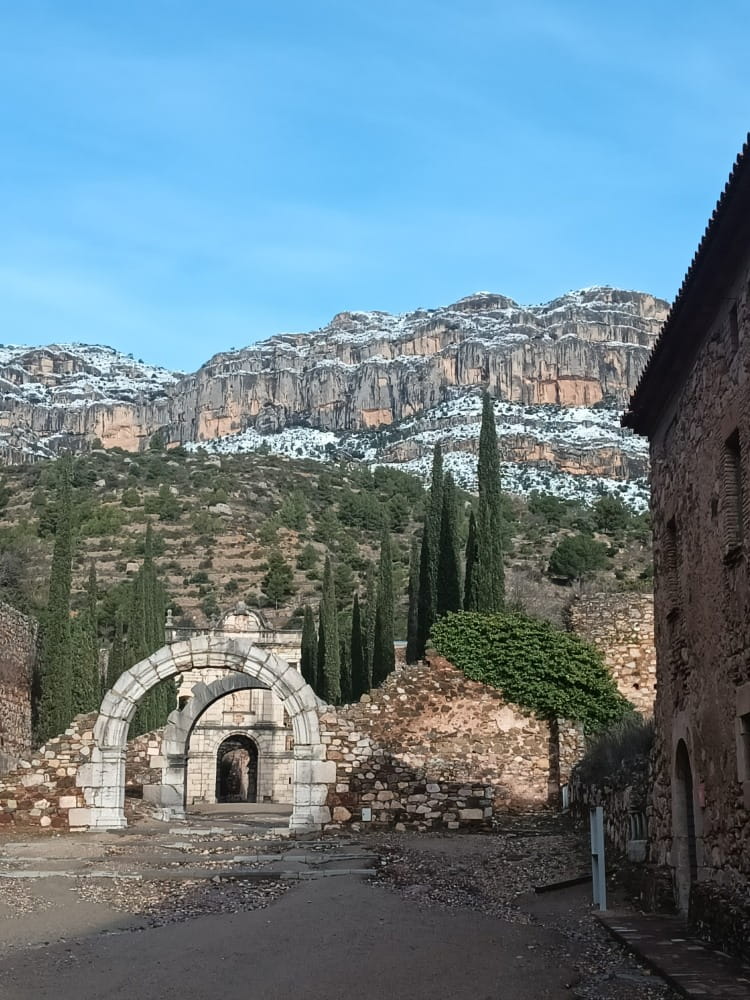
One of those winter explorations recently took Juanma to El Priorat, in southern Catalonia — a region of quiet intensity not far from the Ebro Delta.
He describes it as a landscape that engages every sense. The scent of pine forests and Mediterranean scrub. Vineyards are spreading across steep slopes, with olive groves further below. A place where geology shapes everything: dark slate underfoot, rounded red sandstone walls rising above, and pale limestone cliffs crowning the skyline. Even softer pink and yellow sediments add to the mosaic of colour.
Winter revealed another side of Priorat. The gentle sound of rain turning to snow. Strong winds sweeping along the ridgelines. A stillness that allows you to observe the land more closely. In spring, birds will take over the soundscape, and the vineyards will shift again in colour and mood.
Beyond its landscapes, Priorat is also about taste — distinctive wines and exceptional olive oil, both rooted deeply in the geology that defines the region.
Exploring places like this in winter allows us to understand them properly. To walk slowly, to test routes, to consider how they will feel for our guests in different seasons.
And, as Juanma says, "to grow quietly fond of the mountains and fields before returning to share them".
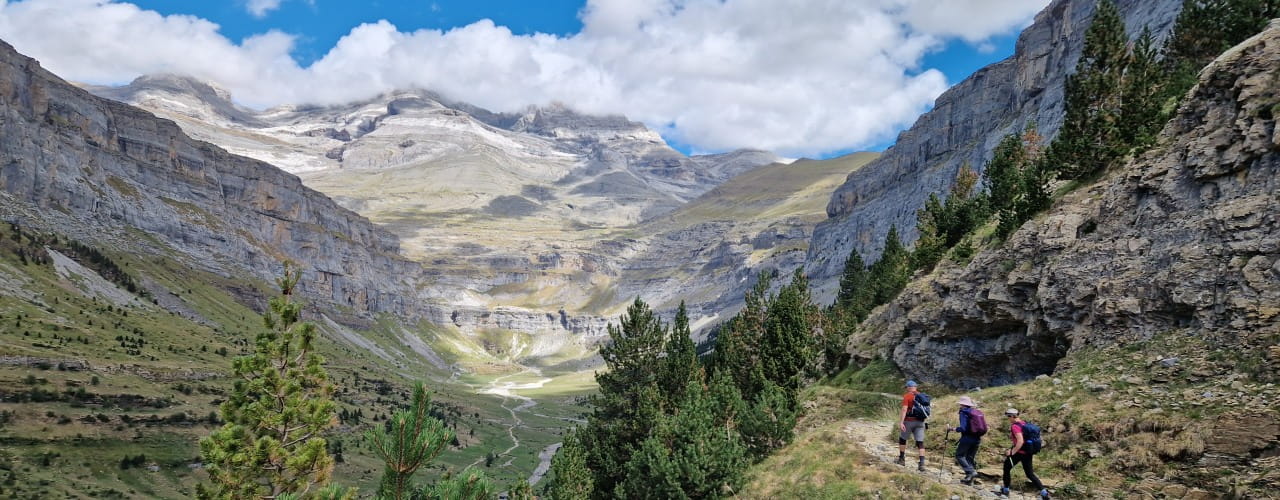
Canyons of Ainsa
Dual level guided holiday
Explore the eastern side of the Ordesa National Park
10 - 17 May 2026
For others, winter means snow underfoot.
Sara, Pablo and David lead our Pyrenees Snowshoeing Holidays, guiding guests through forests transformed by frost and along ridgelines that feel wonderfully remote. But their winter work goes far beyond the weeks when guests are with us. They spend time researching and refining snowshoe routes, revisiting familiar valleys under different conditions and exploring alternative options depending on snowfall and weather patterns. Snow changes the mountains completely, and no two winters are ever the same. Careful route research ensures that each departure is not only beautiful, but also well-balanced, safe and adapted to the conditions of that particular season.
Winter in the mountains also demands knowledge and responsibility. Pablo dedicates time to studying snow conditions and carrying out snowpack assessments, carefully analysing layers and stability to understand avalanche risk. It’s detailed, patient work – and an essential part of working safely in winter terrain. This expertise feeds directly back into the care we take with every group.
Meanwhile, Chema, Roberto and our driver Pablo are immersed in the life of the ski stations. Chema teaches skiing in Astún, sharing his love of the mountains with the next generation. Roberto works as a lift operator in Cerler, part of the team that keeps the slopes moving smoothly each day. And Pablo? He drives ambulances at the ski station in Formigal. When he’s behind the wheel on one of our trips, you can feel quietly reassured – there are few people more experienced in mountain roads and winter conditions.
And then there’s the office team.
While the mountains are busy with snow, our desks are busy with maps, schedules and plans. Winter is when we design the following season’s holidays with care and attention to detail. We review itineraries, refine logistics, speak with our family-run hotels and local partners, and make sure each trip flows seamlessly from start to finish. It’s also when we answer your emails, arrange transfers, update GPS tracks and quietly prepare everything that makes a guided walking holiday feel effortless.
The attention to detail during the winter months makes all the difference when our guests arrive in the Pyrenees. By dedicating this time to preparation, we can ensure that:
- Hikers of all levels feel supported, whether they’re tackling a challenging guided hike or exploring independently.
- Accommodation and dining experiences enhance the holiday rather than being just functional.
- Every aspect of the trip — from the first enquiry to the final farewell — is seamless and stress-free.
0 Comments