
Marmot (Marmota marmota)
Marmots live in a network of burrows in fields and high grassy or rocky pastures on mountain slopes. These burrows are surprisingly complex, often with several entrances and different chambers used for sleeping, raising young and sheltering from bad weather. Typically the entrance to a marmot burrow will be dug beneath a rock. This is thought to offer some protection, as predators such as foxes or birds of prey struggle to enlarge the entrance and reach the animals inside.
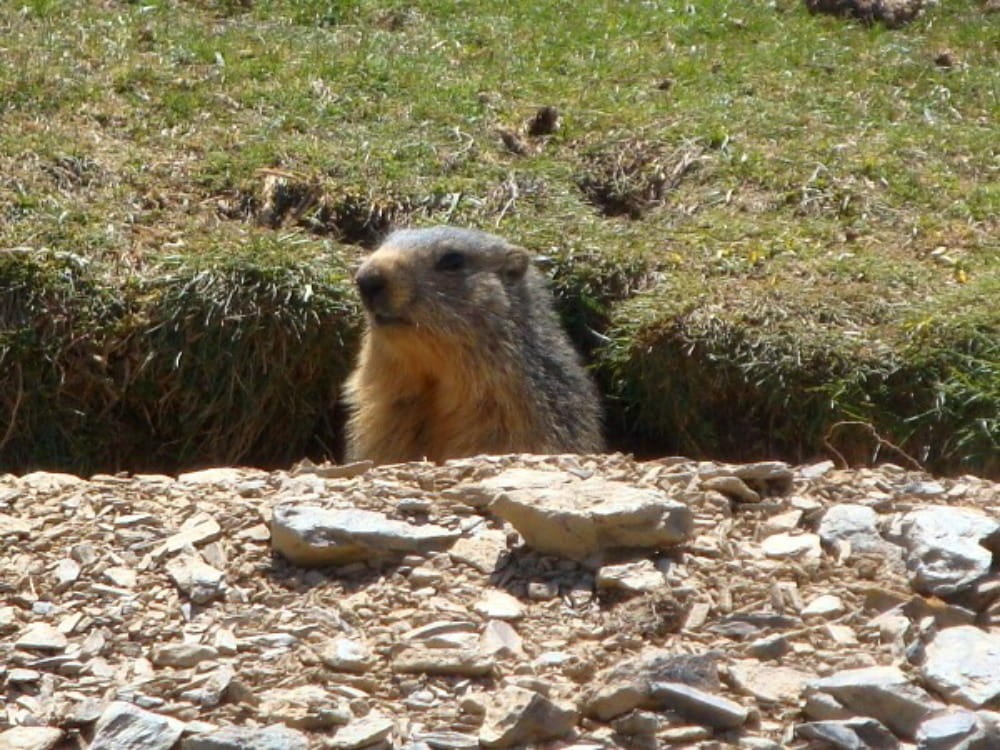
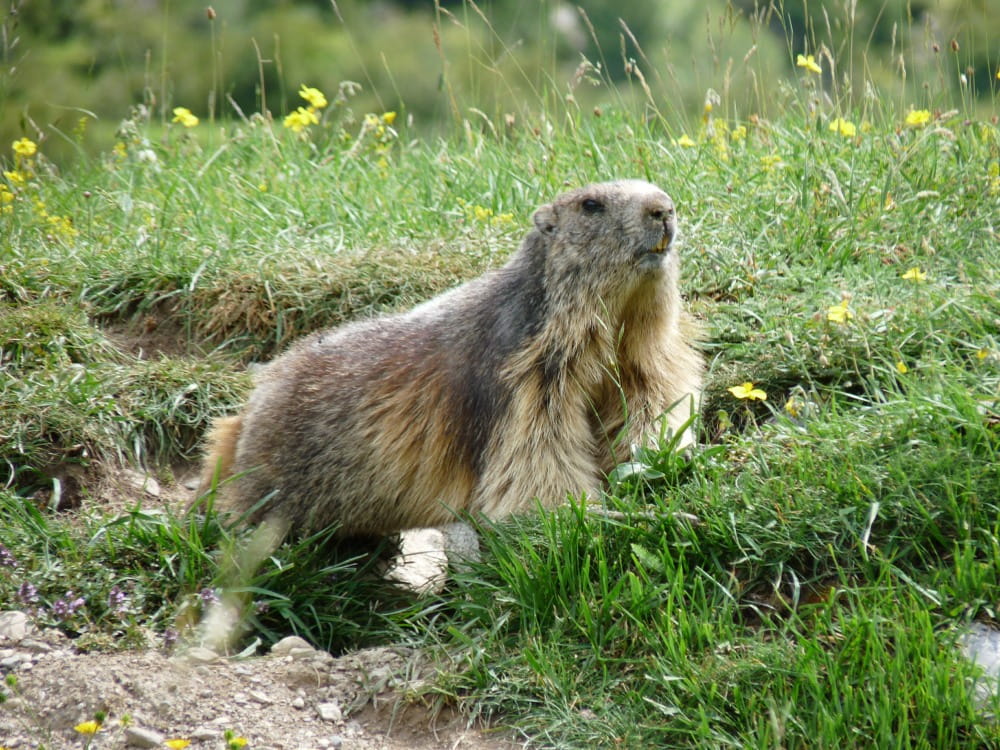
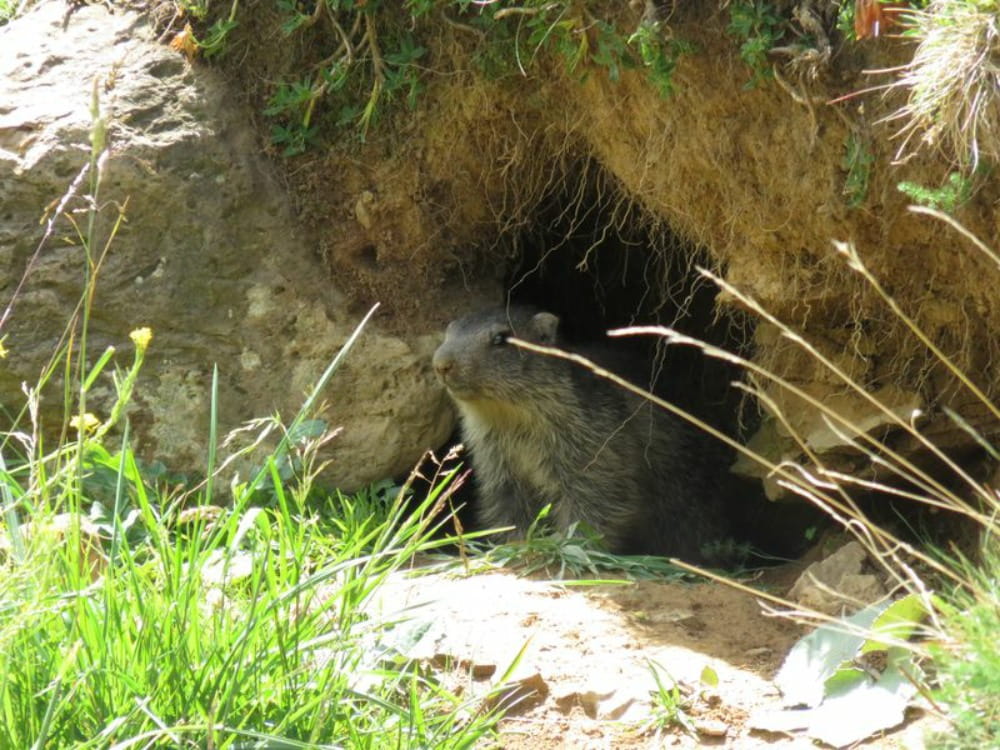
The alpine marmot (Marmota marmota) is a large ground-dwelling rodent from the squirrel family. Adults usually measure around 50–60 cm in body length with a tail of about 15 cm and weigh between 3 and 6 kg, although by late summer they can be considerably heavier. Their short legs and powerful claws are perfectly adapted for digging, allowing them to create extensive underground tunnel systems.
Marmots are highly social animals and live in family groups that can include several adults and young from previous years. Within a colony, individuals take turns acting as sentinels. If danger approaches, the lookout gives a sharp, whistling alarm call that echoes across the mountainside — a sound many hikers quickly learn to recognise. At this signal the entire colony disappears underground in seconds.
Like many animals that live at high altitude, marmots spend a large part of the year hibernating. In the Pyrenees they typically retreat underground in October and remain asleep for around six or seven months. During this time their body temperature drops dramatically and their metabolism slows to conserve energy. They finally emerge in late April or May, often to find the mountains still dotted with patches of snow.
Throughout the summer marmots feed constantly to build up the fat reserves needed for winter. Their diet is mainly made up of grasses, herbs and young plants, although they will also eat insects, worms and spiders when the opportunity arises. By the end of the season they may have doubled their body weight compared with the lean weeks just after hibernation — that’s a lot of eating.
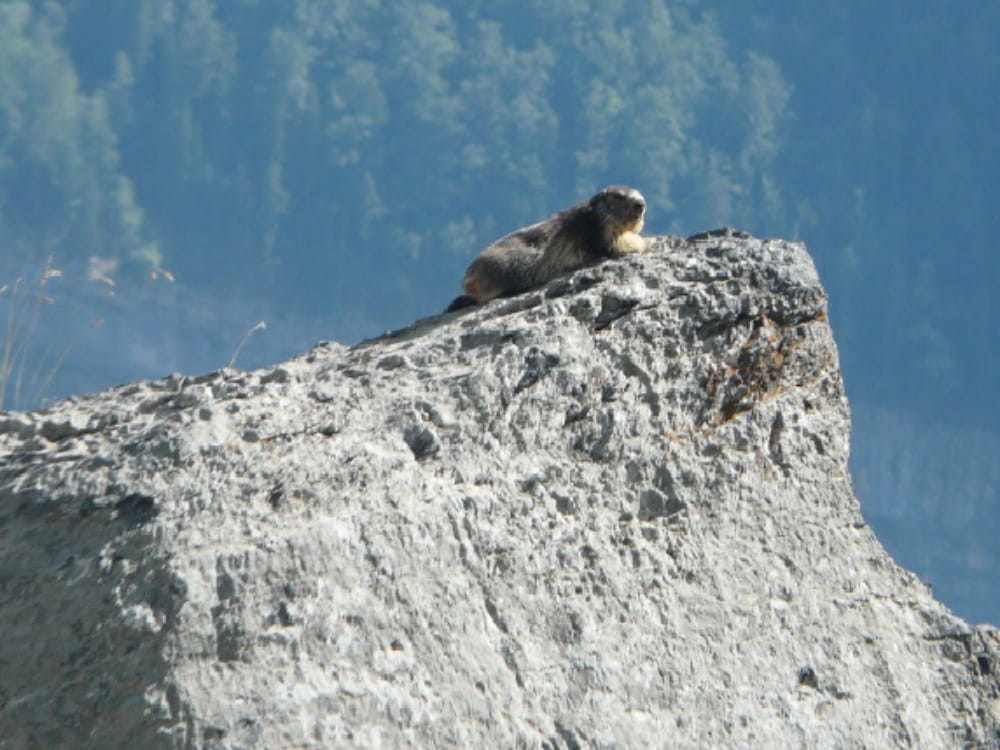
On warm days marmots seem to enjoy the sun and are often seen stretched out on rocks or grassy banks, apparently sunbathing while keeping an eye on their surroundings. These relaxed moments make them one of the most enjoyable animals to watch while hiking in the high Pyrenees.
Marmots can be seen on many walks across the Pyrenees, particularly in open alpine meadows between roughly 1,300 and 2,800 metres in altitude where grassy slopes meet rocky outcrops. On our walks, the Rincón del Verde in the Valle de Tena and the Valle de Otal near Bujaruelo are particularly good places to spot them.
The latest news from our blog
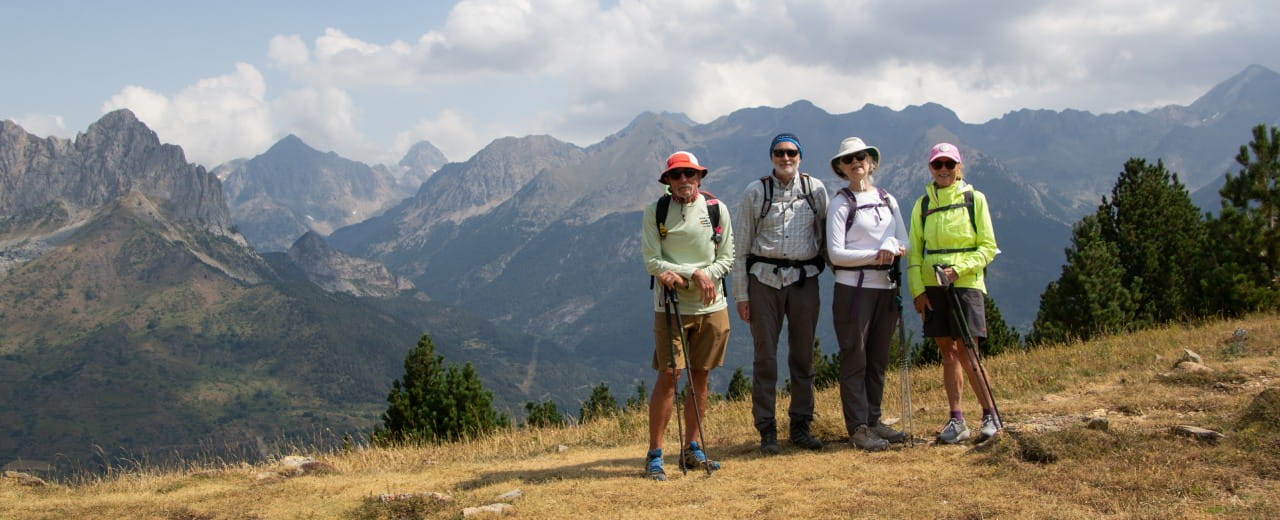
A week in the Heart of the Pyrenees
We look back on a wonderful week in Benasque, where you can find Aneto, the highest peak in the Pyrenees, exploring wild alpine valleys, high mountain lakes and some of the finest scenery in the Pyrenees.
Valle de Tena Explorer: classic walks in the Pyrenees
Explore the Valle de Tena with classic Pyrenean walks, high mountain lakes, local food, historic Jaca and spectacular views on our guided walking holiday.
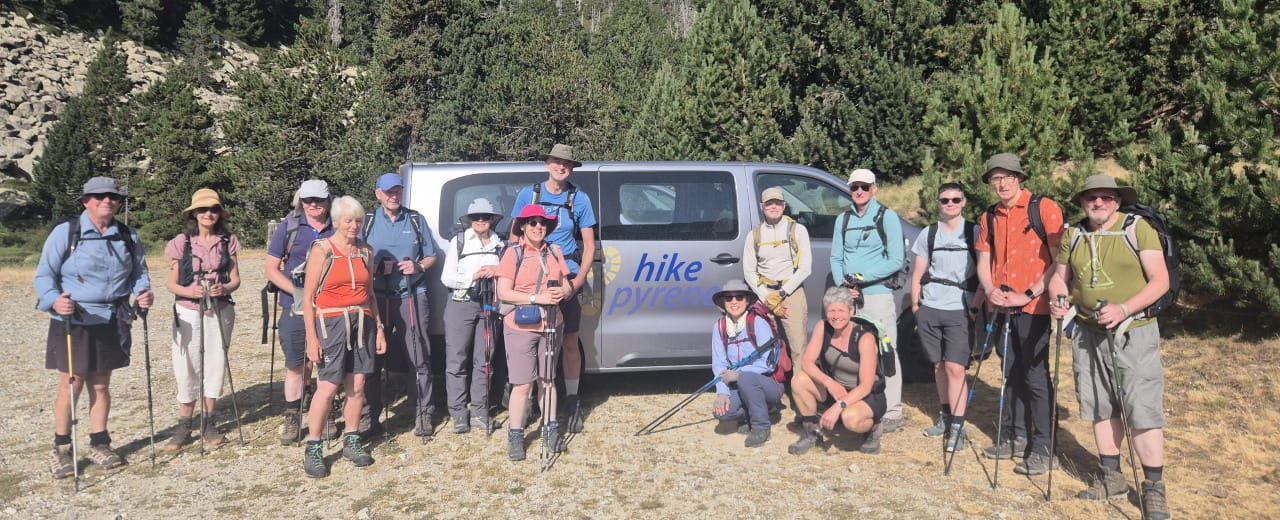
Borderless Pyrenees: Hiking in La Cerdanya
A week of borderless hiking in La Cerdanya, exploring high summits, mountain lakes, Romanesque villages and the landscapes of both the Spanish and French Pyrenees