
The GR paths are a network of extensive paths that criss-cross Europe, mostly in France, Belgium, the Netherlands and Spain. In Spain, GR stands for ‘Gran Recorrido‘ and here in the Spanish Pyrenees, we have a number of these GR paths linking key settlements, passes and valleys, but perhaps the most challenging and impressive of these GR routes and the one that many of our hikes are based around is the GR11. The GR11 stretches the entire length of the Spanish Pyrenees, from Hondarribia, on the Atlantic coast to Cap de Creus, on the Mediterranean coast, and covers a total of 840km, which is divided into 46 day long sections, most of which start/finish where accommodation is available, either a campsite, town, refuge or hostel.
How long will take?
This does depend, to an extent, on your fitness, need for rest days and whether you wish to take some of the spectacular peaks along the way, but 45-60 days is the norm, however, it has been completed in a little as 24 days.
What to expect
The GR11 passes through the mountains of Navarra, Aragon and Catalonia, the latter two regions comprising of steeper and higher mountains, not to mention a hotter climate than Navarra. There are a number of high passes, above 2500m, in the central section and as much as 1600m of ascent / descent in a single day. The GR 11, is a much more recent path than the GR 10, which lies on the French side of the Pyrenees, and offers more wilderness, passes through less villages and probably has better weather!
The GR11 is generally well marked throughout with red and white stripes, however, it would be foolish to head out without an understanding of mountain navigation, along with a map and compass. The terrain underfoot varies hugely, from straight forward 4×4 tracks, through to exposed and narrow rocky paths in high mountainous terrain, where a slip would be very serious.
When to go

The main walking season in the Spanish Pyrenees is between late May and the beginning of October, however this is not a hard and fast rule, as there can be snowfall well into June, and again in late September, which can cover many of the red and white painted markers. On the other hand, there may be some perfect windows of opportunity in the autumn, particularly as the temperatures will be cooler.
There will be unavoidable snow patches throughout June and probably well into July, and these should not be underestimated. Those looking to hike the higher sections of the GR11 during this period should carry both an ice axe and crampons, and have experience of using these. The presence of snow can turn a benign scree slope into a steep icy slope, which without the use of an ice axe and crampons could be potentially very serious should a slip occur. An example of is on the slopes leading up to the Cuello Tebarrai (2782m) from Refugio de Respomuso, which can hold snow until early August. Following a winter and spring of heavy snowfall, avalanche hazards can exist into June, particularly on hot, sunny days. Hut guardians can often be a great source of information regarding the conditions of the GR11 in the vicinity of their hut.
The Hike Pyrenees blog often has up-to-date photos and information regarding conditions in the Aragonese Pyrenees.
Wardened Huts or ‘Refugios’
The wardened ‘Refugios’ along the GR11 will play an integral part of the journey, and will no doubt be a welcome site after a long day of hiking. These should be booked in advance, either online or by telephone, and notified as soon as possible if you plan to cancel your booking. The facilities available do vary from hut to hut, but do remember that these are often located high in the mountains, where supplies are brought in either via helicopter or by mule. Some have showers. They will all offer meals (including packed lunches) and often run a restaurant/bar service during the day.
Prices are very similar from hut to hut and are as follows:
- Overnight: 26 €
- Dinner: 22 €
- Breakfast: 11 €
There is a certain etiquette for using mountain huts, and whilst they vary slightly from hut to hut, overall the following rules will help:
1) Check-in on arrival, where you will be allocated a bed within a specific dormitory. Let the warden know what time you’ll be up in the morning.
2) Boots are not permitted inside the hut, instead change into hut slippers or your own sandals.
3) Rucksacks are often not permitted inside the dormitories. Leave these in the designated areas (sometimes lockers) and only take what you need for the night to the dormitory.
4) Use a sleeping bag liner when sleeping, and ear plugs are a good idea!
5) Lights will all be turned off at about 10pm, make sure you have a head torch to hand.
6) In the morning, leave the dorm quietly, trying not to disturb others.
7) Take all your rubbish with you, otherwise someone else will have to. It is worth noting that if you plan on spending many nights in mountain huts, to consider joining one of the large mountaineering organisations which provide reciprocal rights I.e. discounts of up to 50%. The Austrian Alpine Club (UK) is one such organisation.
Variations and summits
There are an infinite number of variations possible, with all the official variations are listed here: http://www.euro-senders.com/web_eng/grspain/gr_011.htm and described in the guidebook The Gr11 Trail – La Senda: Through the Spanish Pyrenees (Cicerone Guides)
- Rucksack: Needs to be big enough to fit all your gear in, but not so big that you end up filling it with unnecessary items. 55-65 litres should be ample. Contents should be kept in waterproof dry bags or a liner.
- Sleeping bag: Only required, along with a lightweight sleeping mat, if you plan on camping along the way. A 3 season bag should suffice.
- Sleeping bag liner: You must have a sleeping bag liner for the wardened huts (they provide blankets). This should ideally be a silk one, as they are very light and dry very quickly.
- Boots: Must have good ankle support and a sturdy sole, as some of the walking will be on very rough or loose terrain. These will need to be stiff enough if you plan on using crampons.
- Sun hat: Absolutely essential! The sun during the summer, at midday can be blisteringly hot, and without adequate protection, dehydration, sun burn and heat exhaustion are all much more likely.
- Waterproofs: Again, absolutely essential. Don’t forget that just because you’re in Spain, during the summer, that you’re still in the mountains, where the weather can change very quickly, and whilst overall, it doesn’t rain much, when it does, it can be very heavy. That said, heavyweight mountaineering waterproofs are a bit of an overkill, go for something lightweight and breathable. This applies to waterproof trousers too.
- Other essentials: map & compass, pure contact lenses, sunglasses, headtorch, at least 2 litres of water per day.
Books & Maps
- Senda Pirenaica: GR11 Long Distance Path
by JA Lopez Lafuente is one of the most comprehensive Spanish guidebooks to the GR11 and contains maps for each of the 47 stages.
- Trekking in the Pyrenees (Trailblazer)
by D Streatfeild-James covers both the GR10 and GR11 and includes all the practical information you need.
- The Gr11 Trail – La Senda: Through the Spanish Pyrenees (Cicerone Guides)
Useful websites
- www.alberguesyrefugiosdearagon.com – for booking refugios in the Aragonese Pyrenees
- www.lacentralderefugis.com – for booking refugios in Catalonia
- www.yr.no – a very comprehensive weather website
- www.mountain-forecast.com – another comprehensive weather website, locations are by mountain
Refugio Week
Guided hiking on the famous GR11 and summit Monte Perdido
Geology of the Pyrenees
Discover how the Pyrenean range was formed
Pyrenees butterflies
Gallery of the spectacular butterflies and moths we have in the Pyrenees
The latest news from our blog
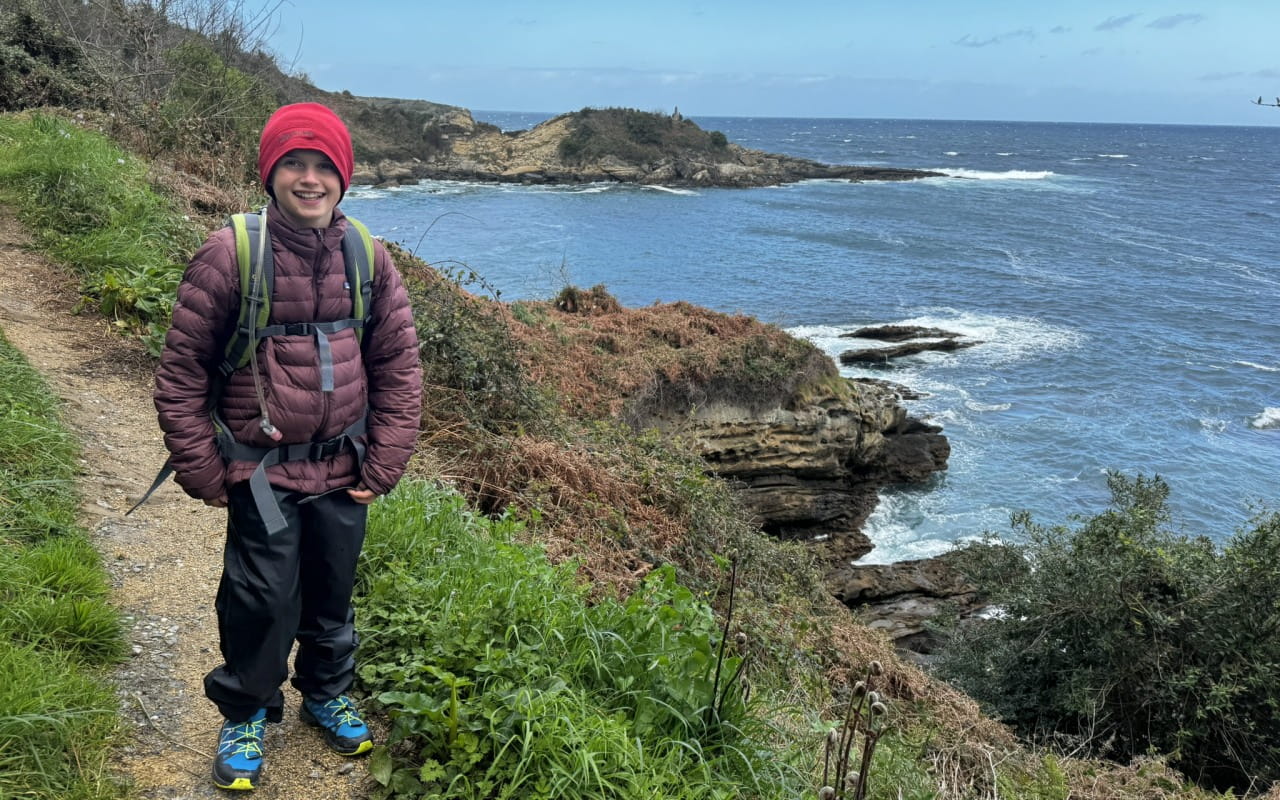
The start of an adventure on the GR11
Over Easter, my son Christopher and I started an adventure on the GR11, hiking a 60 km section over four days from Cap de Higer on the Atlantic coast to Elizondo in the Baztan area of the Pyrenees. The aim is to walk the whole of the GR11 trans-Pyrenean trail all the wa…

Snowshoeing in the sunshine!
A memorable week of snowshoeing in the Pyrenees. After bad weather for most of the winter, our group hit lucky with wall to wall sunshine this week! Routes explored Canal Roya, Ibón de Estanés and the mountains around Portalet, with Pablo and David guiding the group a…

What do we do in winter?
Winter in the Pyrenees is far from quiet. From snowshoe guiding and avalanche training to route planning and designing new itineraries, discover what the Hike Pyrenees team does behind the scenes.