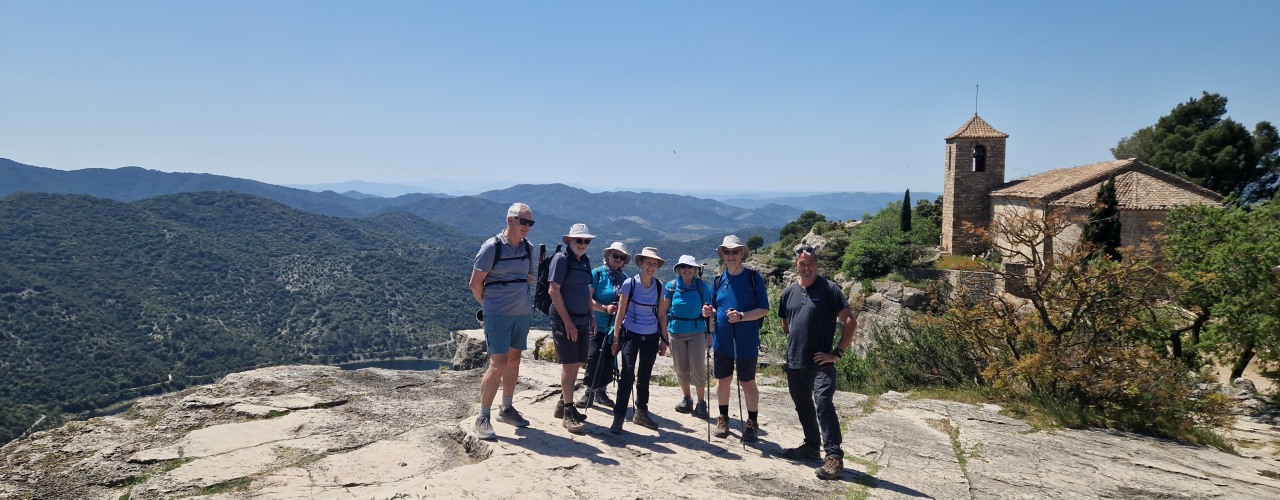
We have just returned from a wonderful week with a private group in Priorat and Beceite, where we enjoyed a beautiful mix of walking, local culture, history and wine. We’ve come back feeling really excited about this holiday and are already thinking about how we can include it in our programme, as we truly believe you’ll fall in love with it just as much as our group did.
We began in Priorat, a region of rugged hills, impossibly steep terraced vineyards, limestone cliffs and striking red sandstone. We stayed in Cornudella de Montsant, in a historic little palace that has been passed down through the same family for more than 130 years.
Walking in Priorat: Siurana, vineyards & mountain views
Our first hiking adventure began straight from the village. Our destination was Siurana, one of the most spectacular villages in Catalonia, perched high on a limestone cliff and looking as though it has been lifted from a storybook. We started by walking beside the reservoir before entering a beautiful Mediterranean forest filled with aromatic plants and pine trees. After a steep, rocky climb, we reached the wonderful “Queen’s Throne”, a viewpoint with sweeping views across the valley. It was the perfect place for lunch, but we couldn’t linger too long, as Paul was waiting for us in Siurana.
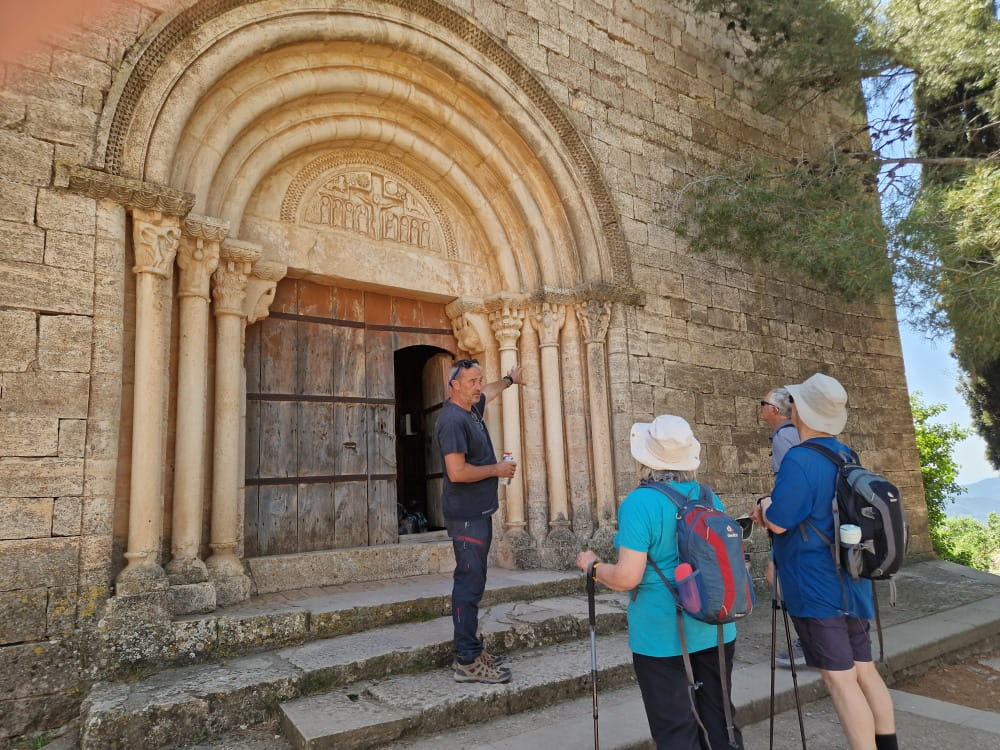
Paul is an Englishman who fell in love with Priorat more than 20 years ago. He knows its hidden corners, its history and its people — the best local contact we could possibly have hoped for. As we wandered through Siurana’s charming cobbled streets, Paul brought the village’s history to life, from its Muslim past through to the present day. After this brilliant introduction, we walked back to Cornudella, completing our circular route.
But that wasn’t the end of our first day. Later, we joined Paul again at the wine cooperative in Cornudella, where he told us about the history of the Carthusian monks, who arrived in the area in the 12th century, and how they made wine. We tasted five of the cooperative’s products, including a very interesting vino rancio.
Wine, history and local culture in Priorat
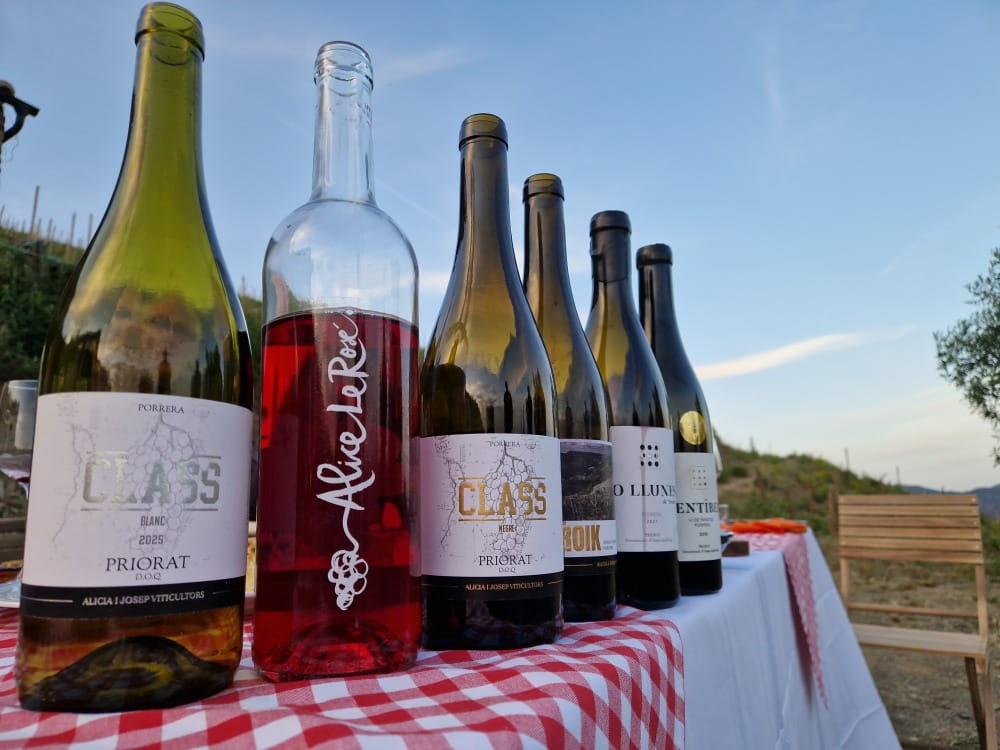
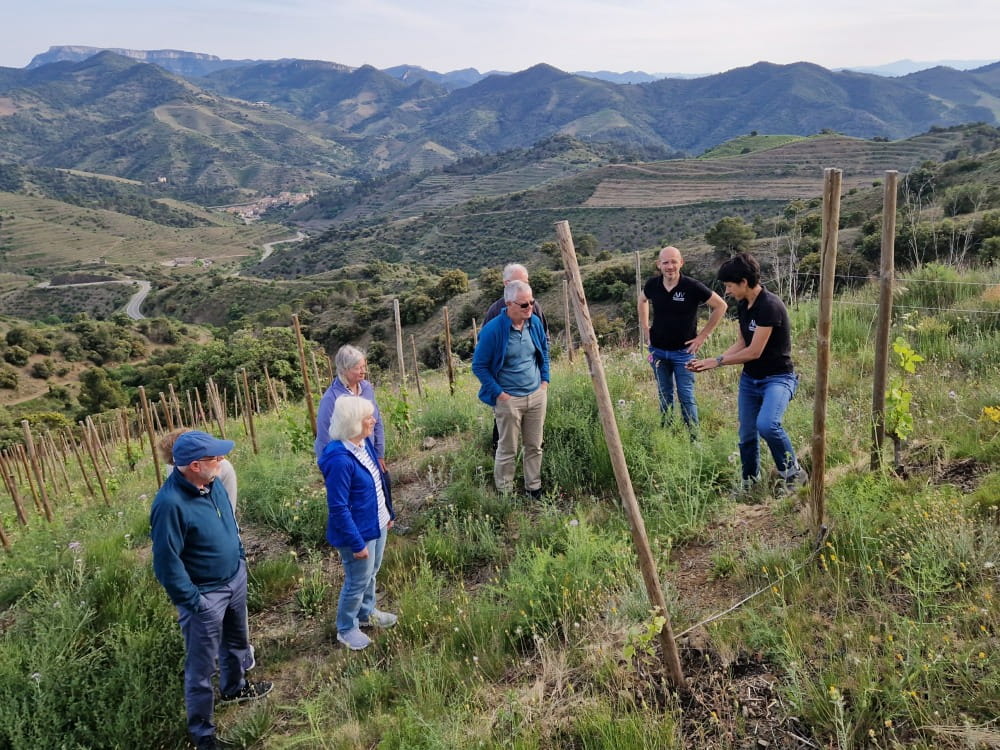
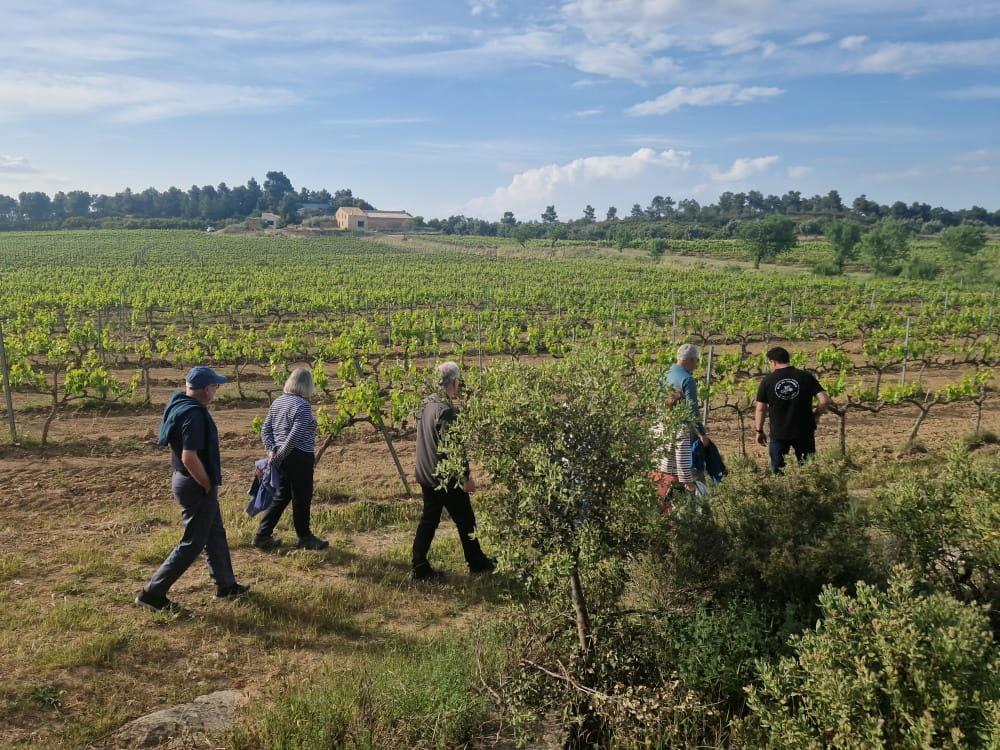
That afternoon, we visited Alicia’s vineyards. Alicia is both a winegrower and winemaker, and when she talks about her vines and her wines, she does so with such passion that everyone is completely captivated. She has built a project rooted in values such as sustainability, care for the soil and working without chemicals or treatments. You can really taste that philosophy in the quality of her wines — elegant, delicious and full of character. We had dinner among the vines, enjoying a truly special evening thanks to Paul, Alicia and Marc.
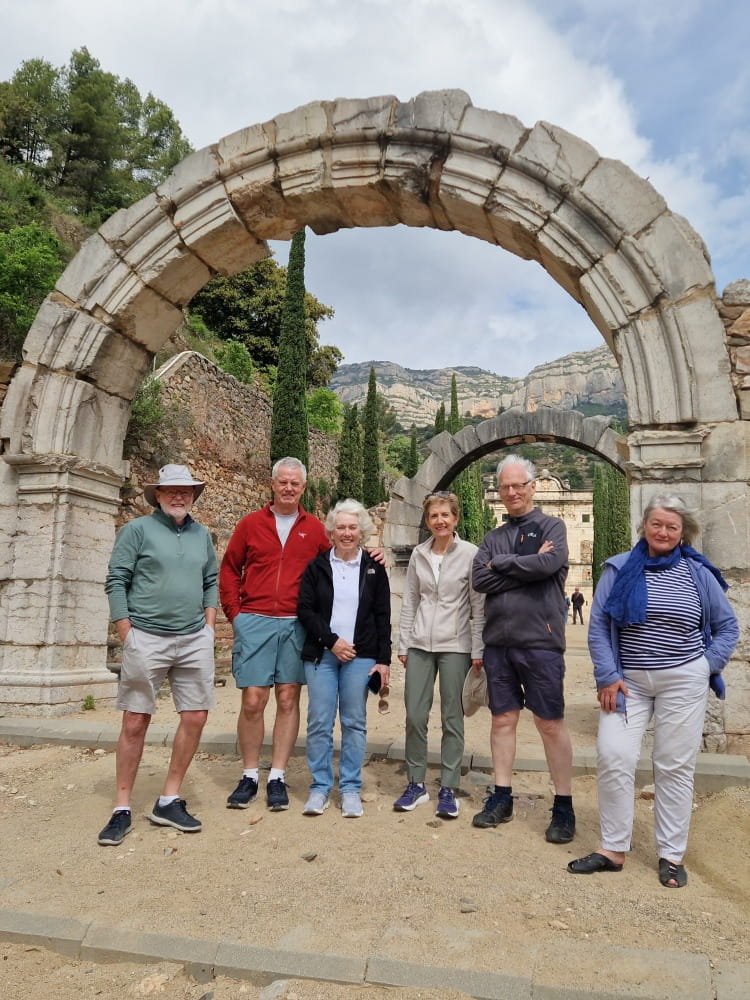
The following day was our transfer and rest day, although there was still plenty to discover. We first visited the Monastery of Escaladei, founded by Carthusian monks in the 12th century. There, we enjoyed a fascinating virtual visit and explored the ruins. This is one of those places that really helps you understand the historic and spiritual importance of Priorat, its mountains and its vineyards.
We then visited Molí de l’Oli, a family-run olive oil producer where generations have cared for ancient olive trees and produced exquisite organic extra virgin olive oil. We saw part of the estate, visited the mill and enjoyed a small olive oil tasting. It’s amazing how interesting olive oil becomes when someone explains it properly and with such care. Afterwards, Neus, the lady of the house, prepared a meal for us with local products and traditional dishes from the area.
The love and attention they put into everything at this place is really worth mentioning. We feel incredibly lucky to be able to include this experience, as it is not something they often offer — the land and the mill already keep them more than busy. Neus and Ricard opened the doors of their home to us, and that is exactly how it felt: like being welcomed by a very special family.
From Priorat to Beceite
After lunch, we continued on to Beceite, a medieval village surrounded by mountains, crystal-clear rivers and Mediterranean forest. We stayed in a beautifully restored old paper factory, a reminder of the village’s important paper-making past. For centuries, Beceite used the power and purity of the water from the Ports mountains to drive its mills and workshops. Here, we were hosted by Javi and Alberto, always on hand and ready to help with anything we needed.
Walking in Beceite and Els Ports
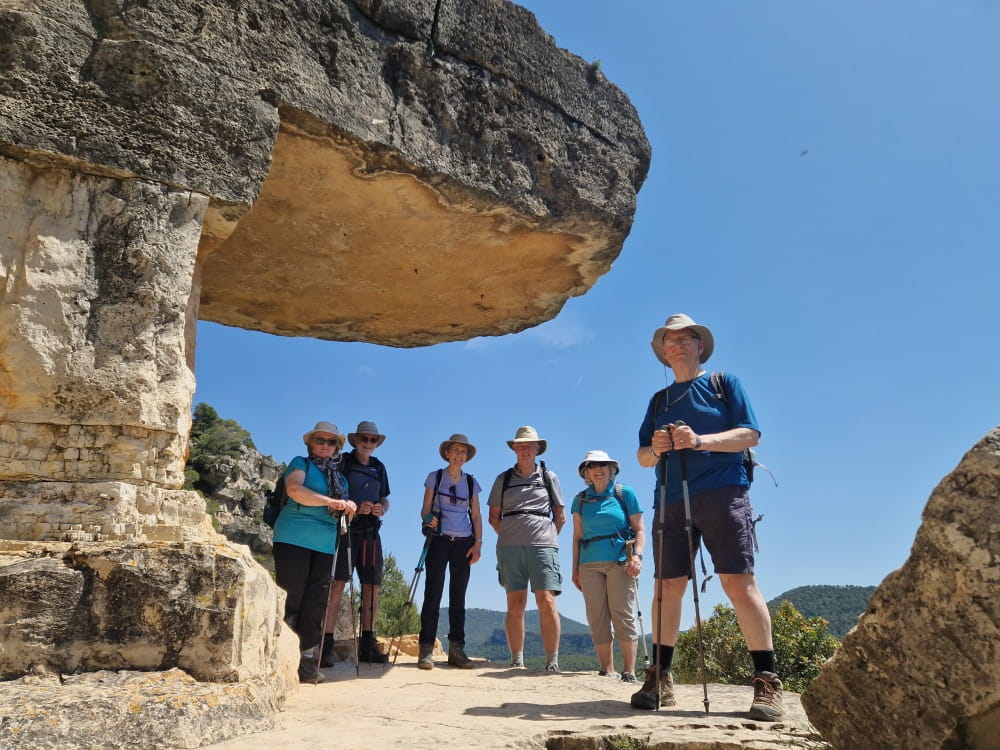
For our third walk, we visited the most emblematic place in the area: El Parrizal, a narrow limestone gorge. We first walked along the riverbed to the end of the canyon, where the rocks block any further progress. From there, we climbed up a small path towards the area of an old mine. From high above, the views down into the canyon and across its towering walls were spectacular. We returned via quite a steep descent, completing our circular route.
That afternoon, we visited the vineyards of Mas de Toribio, another family-run project. Once again, it was the winegrower and winemaker himself, Enrique, who shared the story behind the vineyard. We walked among the vines, watching the pruning work that was taking place at the time, and finished with a wine tasting, sunset and barbecue in the vineyard. Another magical experience — the kind that is not always easy to find.
The adventure continued. We had eaten and drunk very well, but there were still mountains to explore. This time we climbed Peña Galera, one of the most iconic peaks in the area. From below, it looks almost impossible to reach the summit without climbing, but little by little, a narrow path opens up between the cliffs and the forest, which was full of spring flowers. As we gained height, the views became more and more spectacular. A storm was threatening to arrive, so we had to keep moving. We ate like kings on the summit and made our descent without delay.
Our final walk was in Els Estrets d’Arnes, where the river has carved a gorge between huge walls of rock. We followed a circular route that combined open sections with views of the rocky mountains and stretches of Mediterranean woodland filled with flowers — rockroses, primroses, rosemary, poppies and many more. It was a wonderfully varied route and a little less technical than some of the others that week, giving us time to chat, take photographs and simply enjoy the landscape.
A memorable end in Valderrobres
On our transfer day back to the airport, we had some free time in the morning, so we decided to visit the castle and church in Valderrobres, both dating from the late 12th century. After the visit, while talking to people in the village, we discovered that a group of local joteros were singing in a nearby room. The group was made up of men in their seventies and eighties from Valderrobres and the surrounding villages, who meet every Sunday to sing jota. And there we were, sitting in this small room, smiling from ear to ear at how lucky we were to have stumbled across such a special moment.
And that, really, is what makes Priorat and Beceite so special. In places where tourism has not taken over everything, there is still room for moments like this to happen naturally. The contact with local people, and the love they have for their land, is what made this holiday so memorable.
Would you like to experience this immersion in Mediterranean mountains, culture, wine and walking with us?
If so, please visit our Private Group Walking Holidays page, or simply get in touch, for further details.
We’ll leave it there for now — this has been a slightly longer article than usual, but we really wanted to share what we experienced during this special week. We’ll keep telling you about our adventures, as the summer season has only just begun.
Thank you for being here, and we’ll see you in the mountains.
The latest news from our blog
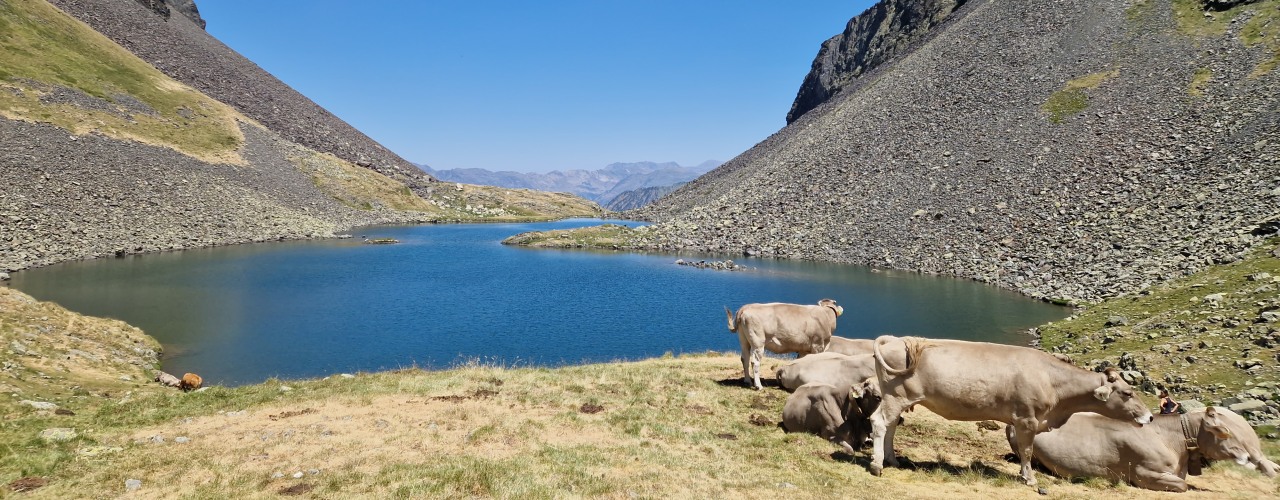
A week in the Heart of the Pyrenees
We look back on a wonderful week in Benasque, where you can find Aneto, the highest peak in the Pyrenees, exploring wild alpine valleys, high mountain lakes and some of the finest scenery in the Pyrenees.
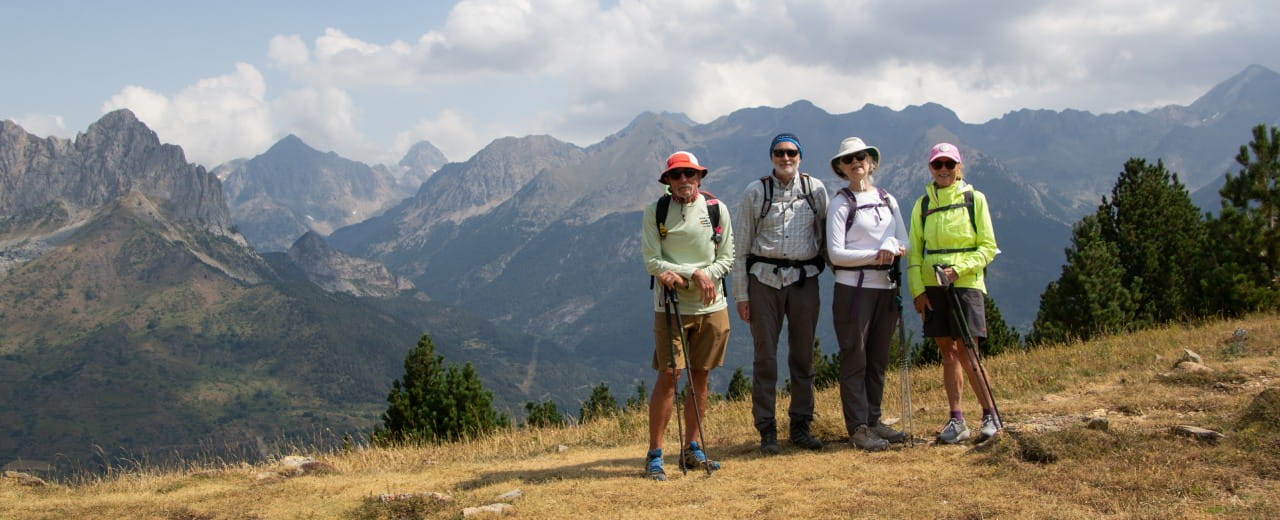
Valle de Tena Explorer: classic walks in the Pyrenees
Explore the Valle de Tena with classic Pyrenean walks, high mountain lakes, local food, historic Jaca and spectacular views on our guided walking holiday.
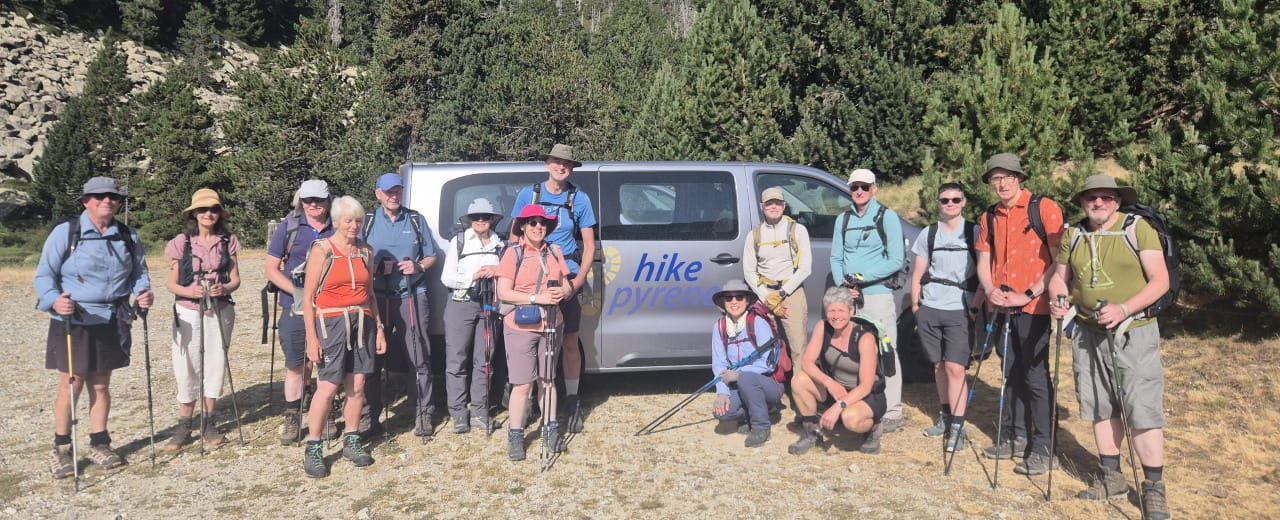
Borderless Pyrenees: Hiking in La Cerdanya
A week of borderless hiking in La Cerdanya, exploring high summits, mountain lakes, Romanesque villages and the landscapes of both the Spanish and French Pyrenees
Your stories are so enticing. I am here I. Barcelona eagerly awaiting my walking trip in the Catalan Pyrenees. Who knows, I may be back for more!
Hi Joanne,
I’m sure you’re going to love the Catalan Pyrenees- it’s a beautiful area 🤩
Enjoy your hiking,
Phil