Somehow, we’re already approaching September and another summer in the Pyrenees seems to be flying by. Before the season gathers pace again, we wanted to look back at one of our adventures from earlier this summer, when we spent a wonderful week walking in one of the wildest corners of the Spanish Pyrenees: Benasque.
Rated by our guests
Benasque was once known as the “Hidden Valley”. Until the early 20th century, reaching it meant long journeys on foot or horseback through the narrow Congosto del Ventamillo gorge.
That isolation helped the valley preserve a strong identity, still visible today in its villages, traditions, food and local language, Patués. You’ll often see the word “Tuca” on maps here, meaning a peak or mountain.
For centuries, shepherds brought their livestock into the high summer pastures, while the remote mountain trails were also used by smugglers crossing into France with tobacco, coffee, salt and other goods.
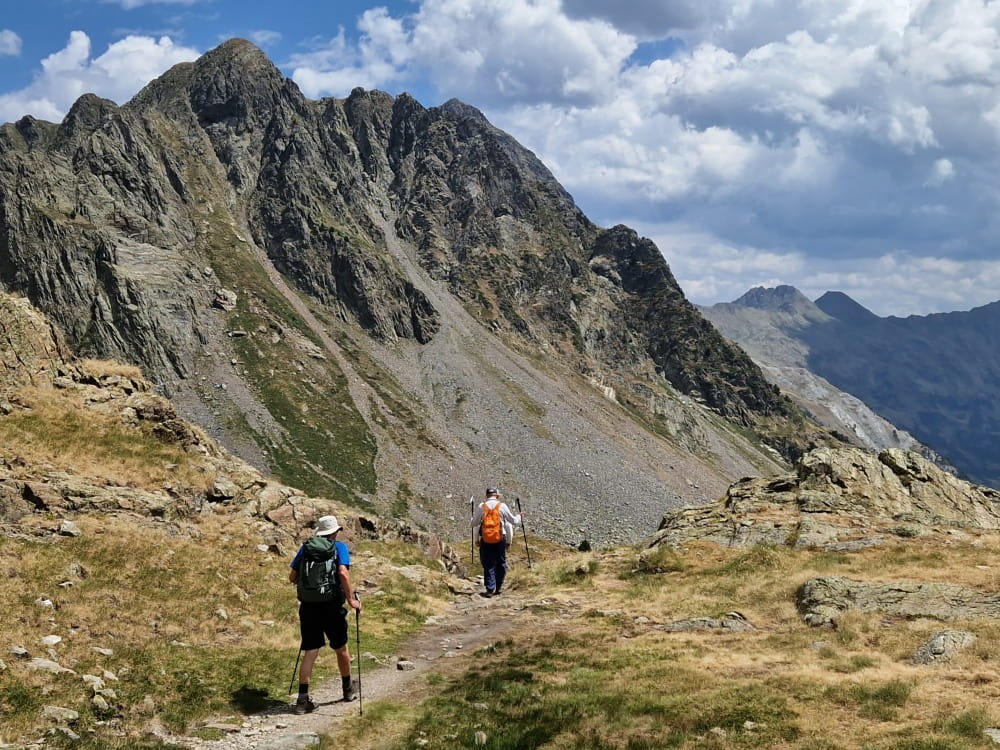
Our own rucksacks were rather less exciting — mostly water and sandwiches — but during the week we followed some of those same old paths as we explored Benasque’s many side valleys.
Literola and Remuñe
Our first walking day took us into the Literola and Remuñe valleys.
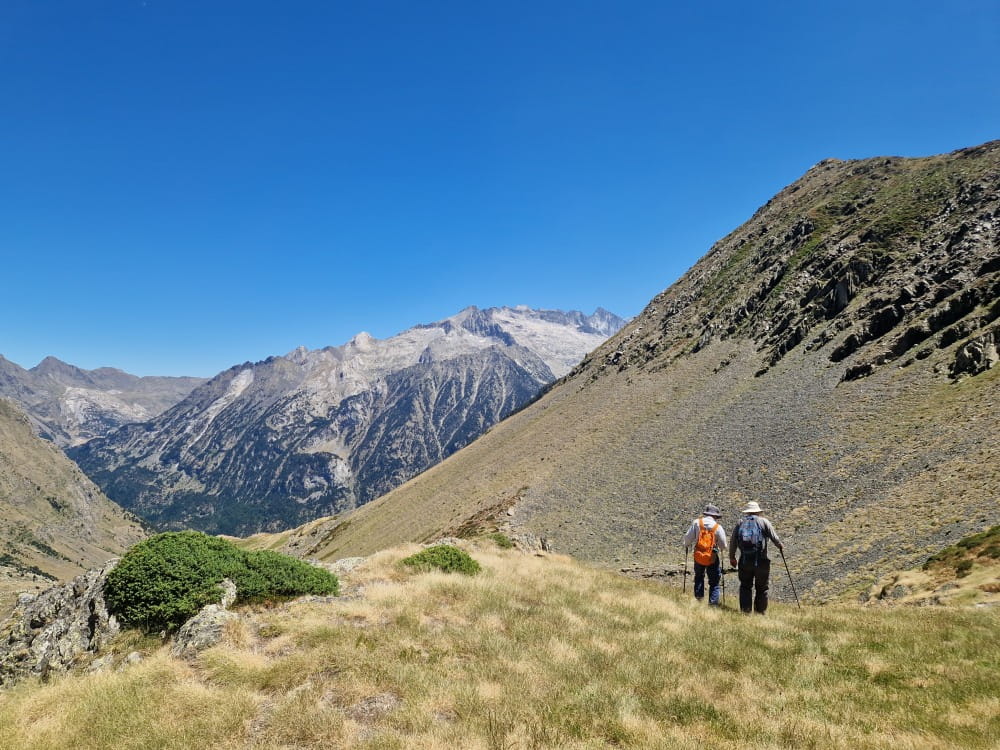
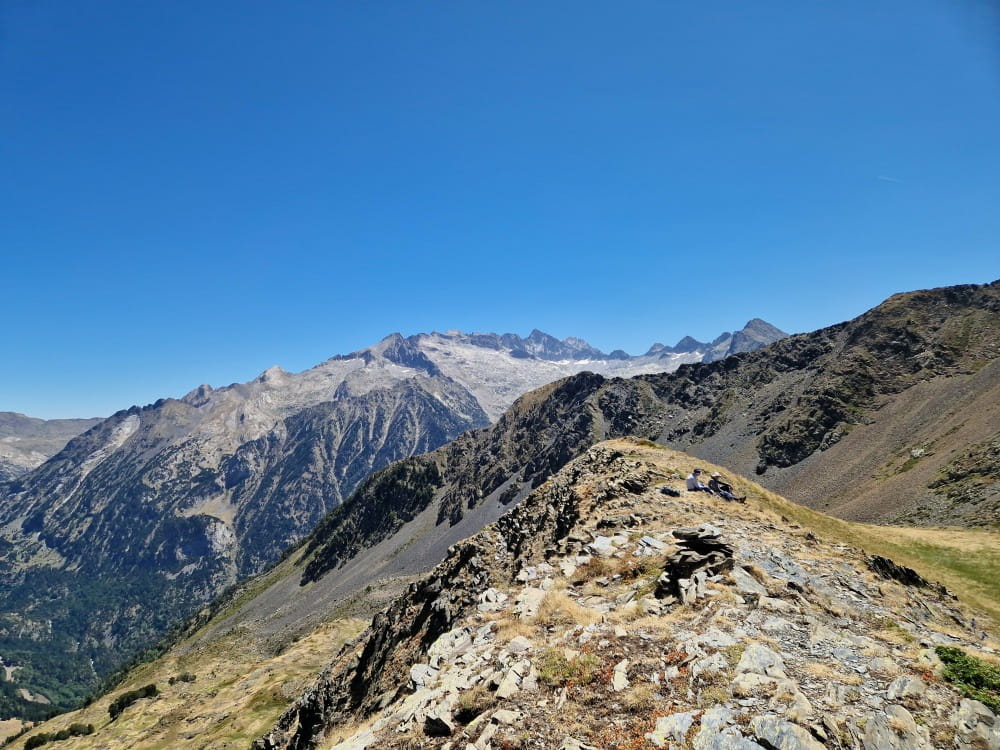
The longer route climbed towards Tuca Daliú, with wonderful views of Aneto, Posets, Perdiguero and the Maladeta Massif. Rather than pushing on to the summit, we took our time along the ridge and simply enjoyed the panorama.
In Remuñe, the shorter route crossed increasingly rocky terrain to reach two beautiful high mountain lakes surrounded by 3,000-metre peaks — demanding underfoot, but well worth the effort.
Col del Toro and Tuca Paderna
The next day we explored the upper Benasque Valley.
The longer walk headed towards Tuca Paderna, a wonderfully wild viewpoint over the Maladeta Massif, while the shorter route passed the extraordinary Forau de Aigualluts, where the river disappears underground before eventually resurfacing in the Val d’Aran.
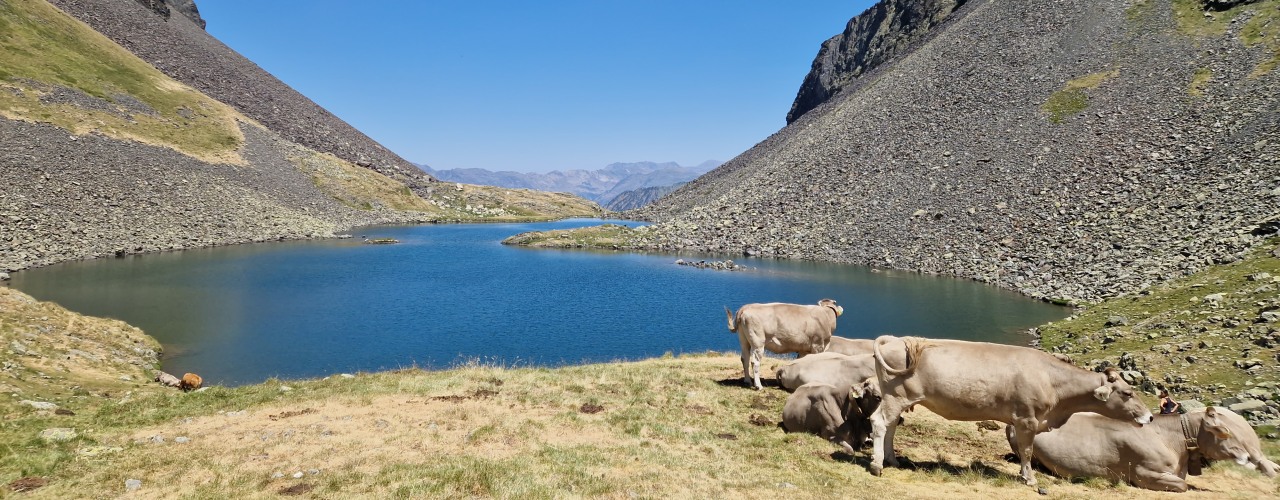
Our destination was a peaceful mountain lake surrounded by grazing cows. Not a bad lunch spot.
The Estós Valley
On the hottest day of the week, we were grateful for the shade of the Estós Valley.
Both routes began beside the river in beautiful woodland before separating. The longer walk climbed to the dramatic Escarpinosa Lakes, beneath granite walls and pinnacles, while the shorter route continued towards the Turmo hut before returning on a quieter circular trail.
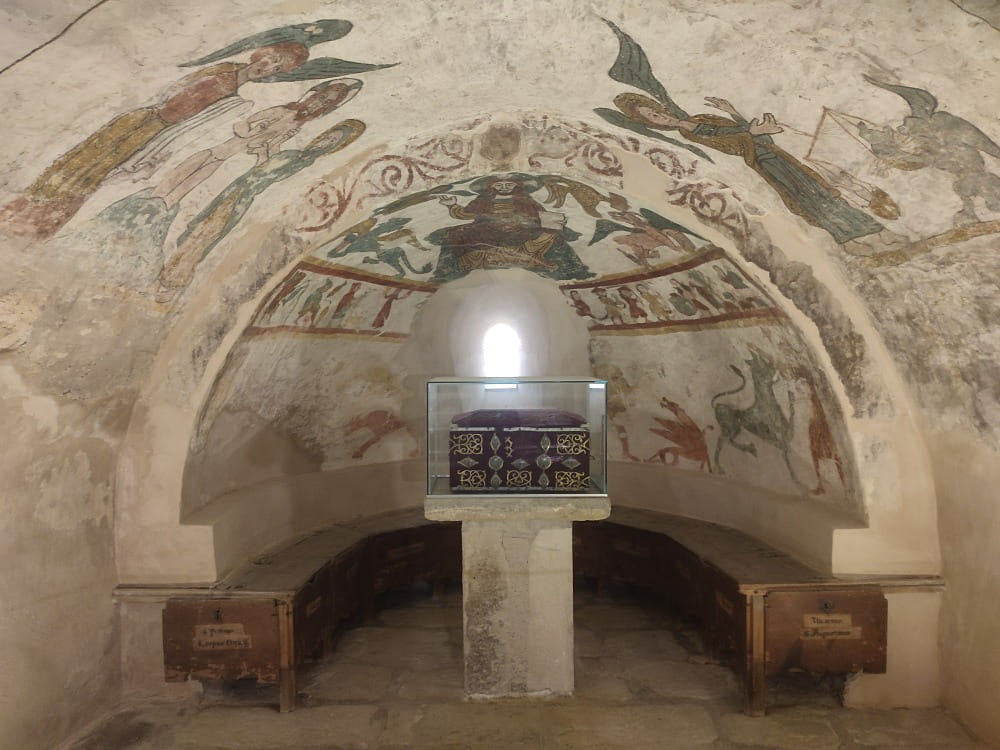
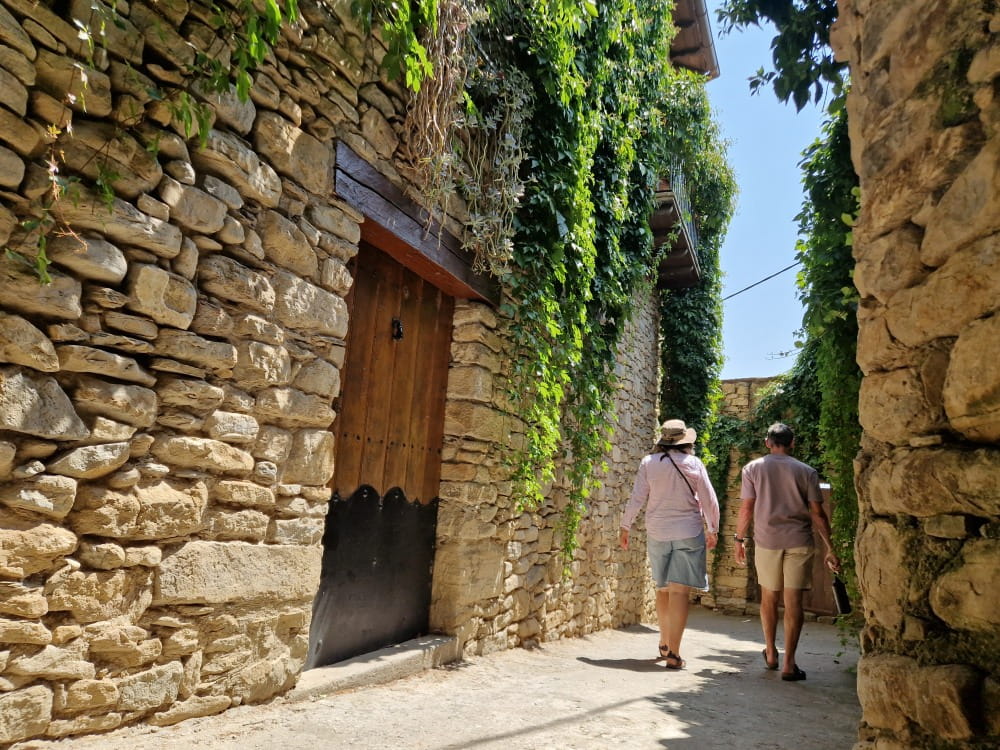
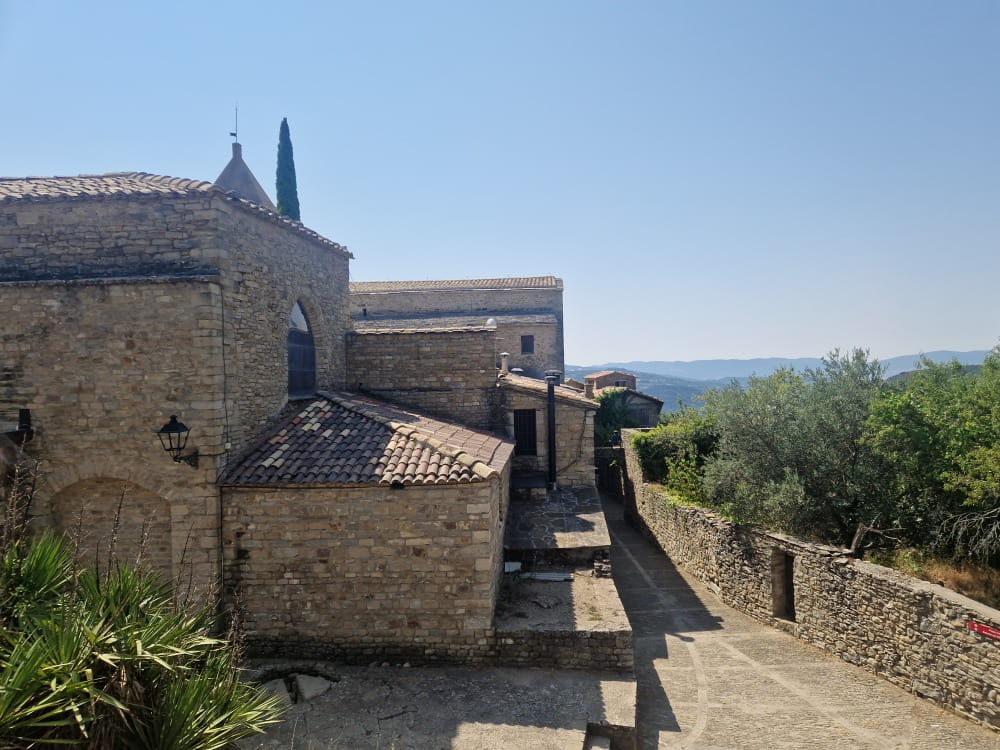
After several days in the mountains, we gave our legs a rest and headed south to Roda de Isábena.
This tiny medieval village is home to a remarkable 11th-century cathedral and was once an important frontier settlement between Christian and Muslim territories.
After exploring the village, a cold drink in the square seemed only sensible — followed, naturally, by thoughts of a proper Spanish siesta.
Vallibierna and Sierra Negra
Vallibierna gave us one of the most unusual landscapes of the week.
We walked towards Sierra Negra, where dark slate, ancient rock and an extraordinary orange stream coloured by iron deposits made the valley feel almost otherworldly.
The longer route continued towards Pico Estibafreda, while the shorter walk explored the upper valley. Both had superb views of Aneto and the Maladeta Massif.
Even better, we had this wild corner almost entirely to ourselves, apart from a few sarrios moving across the slopes.
Llanos del Hospital
And suddenly, it was our final walking day.
From Llanos del Hospital, the shorter route climbed towards the Ibones de Gorgutes, while the longer walk headed for Salvaguardia Peak and the Port de Benasque, with magnificent views across the Pyrenees and into France.
It was a fitting way to end the week: tired legs, happy faces and that familiar question already being asked on the walk back down: Where are we going next?
For us, Benasque is one of the wildest and most alpine corners of the Pyrenees. The walking can be demanding, with rocky trails and rugged terrain, but that’s also part of what makes it so rewarding.
It’s the kind of place that stays with you long after you leave — not just the views, but the feeling of being among these mountains.
September is here, but our walking season is far from over.
See you on the trails!
The latest news from our blog
Life in the Pyrenees
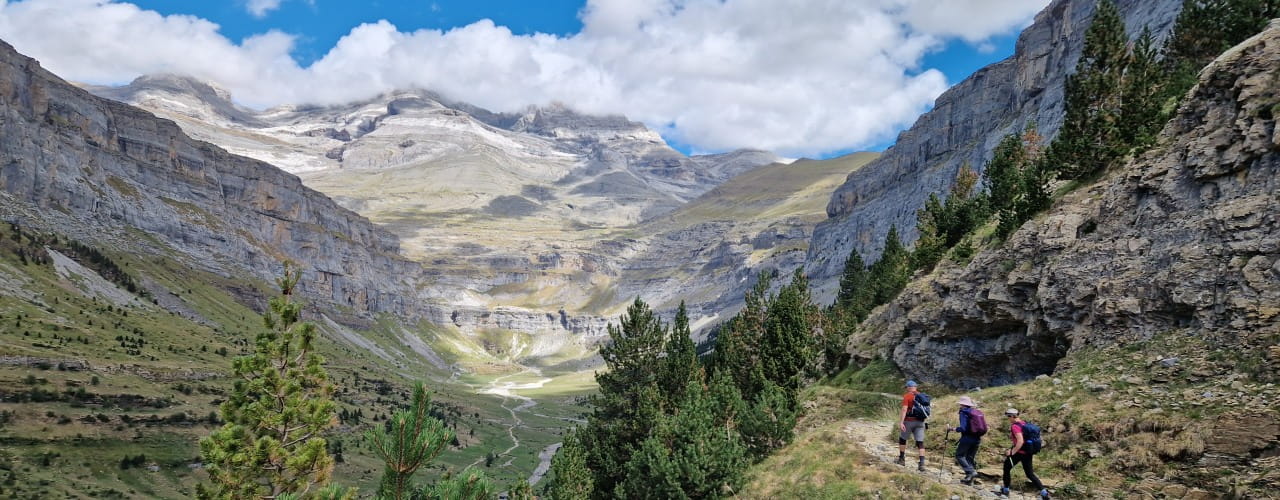
Discover Ordesa: when small things become great
Another wonderful week in Ordesa National Park, where the smallest moments often leave the biggest memories. From breathtaking mountain views and rewarding hikes to unexpected wildlife encounters and plenty of laughter, our guests share what made this Discover Ordesa holiday so special.
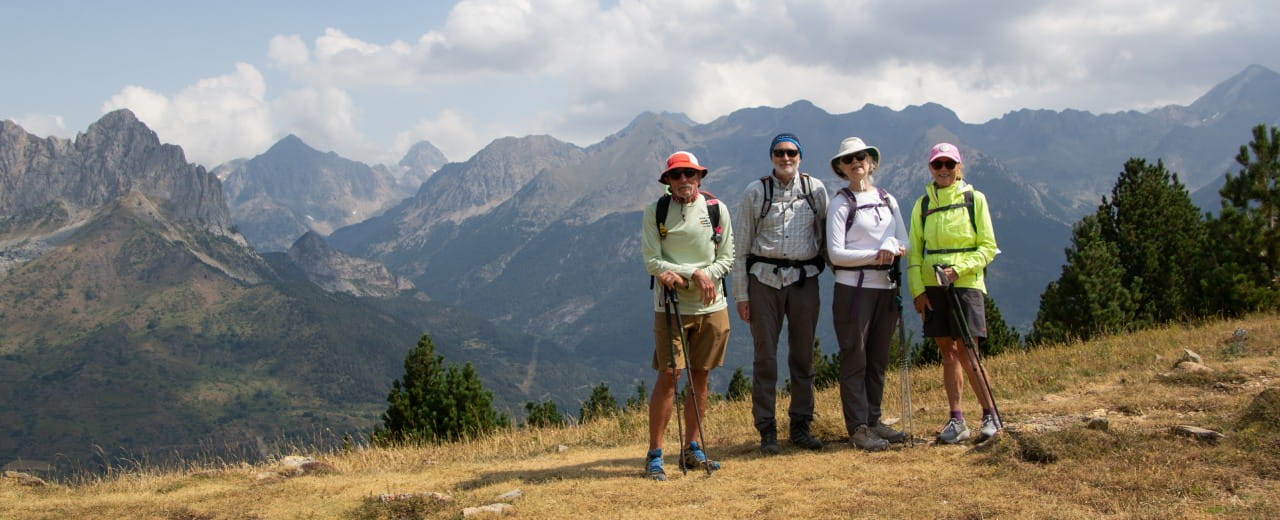
Valle de Tena Explorer: classic walks in the Pyrenees
Explore the Valle de Tena with classic Pyrenean walks, high mountain lakes, local food, historic Jaca and spectacular views on our guided walking holiday.
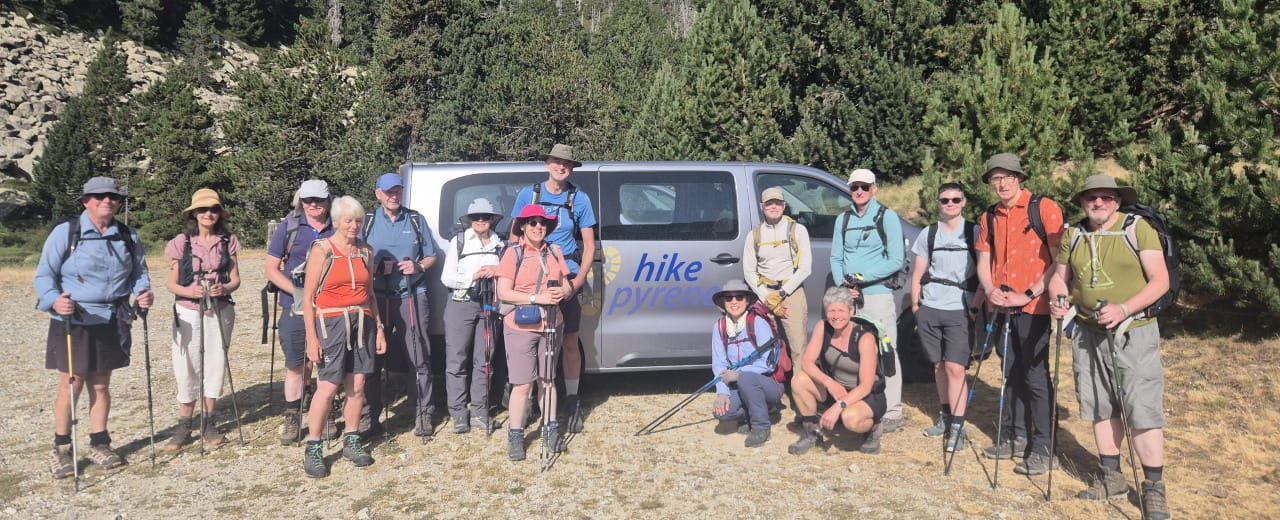
Borderless Pyrenees: Hiking in La Cerdanya
A week of borderless hiking in La Cerdanya, exploring high summits, mountain lakes, Romanesque villages and the landscapes of both the Spanish and French Pyrenees
0 Comments