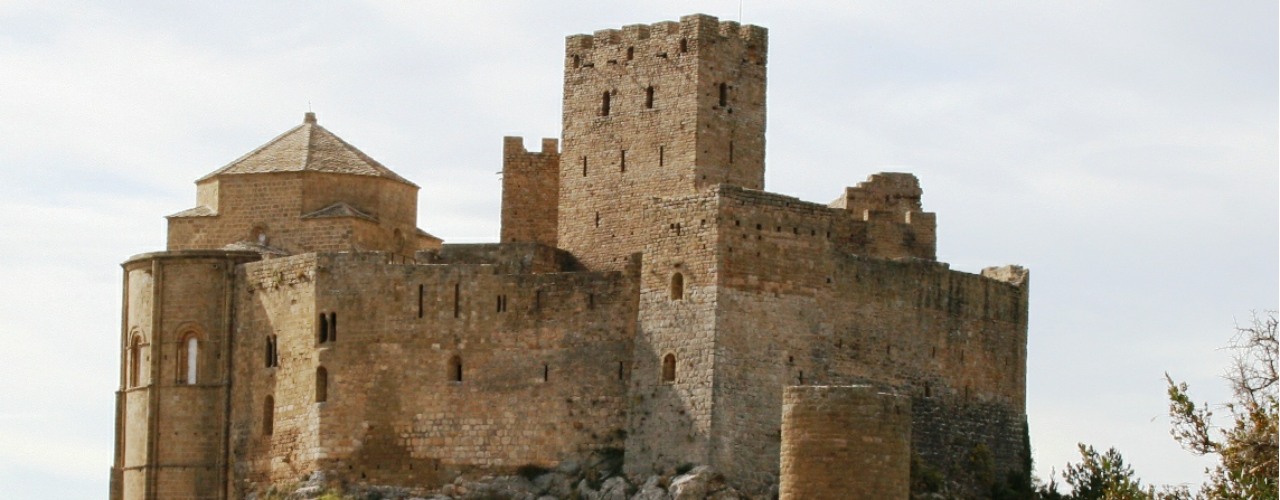
Rising above the plains of Huesca, on a rocky spur at the edge of the Sierra de Guara, the Castle of Loarre feels less like a monument and more like a presence. Long before you reach its walls, it commands the horizon — austere, purposeful and quietly dramatic. It is easy to see why Loarre is considered one of the finest Romanesque castles in Europe, but its true fascination lies not just in its architecture, but in the layers of history that surround the castle.
This is a place where the early Kingdom of Aragon took shape, where the early medieval Christian kigdom met the Islamic Caliphate of Cordoba, and where, centuries later, Hollywood would briefly step in to recreate a different kind of epic.
A frontier castle for a new kingdom
To understand Loarre, it helps to step back into the early 11th century. This was a time when the Kingdom of Aragon was still taking shape, its borders fluid and uncertain. The plains below the castle formed part of a volatile frontier between Christian territories to the north and Muslim-controlled lands to the south.
Loarre was conceived as a strategic response to this uncertainty. Its earliest construction is linked to King Sancho III of Pamplona (King of Navarra and who's death in 1035 created the county and then kingdom of Aaragon), who recognised the importance of this limestone outcrop as a natural stronghold. From its towers, the view stretches across the lands surrounding the Muslim stronghold in Huesca, a vast open landscape where movement could be monitored and controlled.
Later, under King Sancho Ramírez — the first King of Aragon — the castle was expanded and strengthened, becoming a key military and political base during the kingdom’s southward expansion. Later, as the border moved south during the reconquista, the castle took up more of a religious function with an important church based there.
However originally, Loarre was never intended as a palace or monastery. Its purpose was vigilance, defence and authority — a visible statement of a young kingdom finding its footing.
Riglos & Alquézar
Twin centre guided holiday
3 - 10 May 2026
18 - 25 October 2026
Stone, silence and romanesque beauty
What sets the Castle of Loarre apart is not only its scale, but its coherence. Unlike many medieval fortresses, it was added to and altered, but never extensively in later centuries. As a result, it retains an exceptional architectural unity that allows us to read its original purpose with unusual clarity.
The defensive walls and semicircular towers follow the contours of the rock itself, while narrow arrow slits and elevated battlements speak of its military role. Yet at the heart of the complex lies a very different space: the Church of San Pedro - one of teh best expamples of Romaesque architecture in Aragon.
This Romanesque church, with its elegant dome and restrained proportions, introduces an unexpected sense of calm. Its presence reflects the dual nature of Loarre, which evolved from a frontier fortress into a religious centre.
Here, stone speaks quietly. Decoration is minimal and austere, but deliberate. Light filters through small alabaster windows, creating an atmosphere that feels contemplative rather than imposing — a reminder that medieval power was as spiritual as it was military.

Loarre on the Big Screen: Kingdom of Heaven
In 2005, Loarre gained an unexpected new chapter in its long history when it became one of the filming locations for Ridley Scott’s Kingdom of Heaven. The castle was used to represent Jerusalem, its weathered stone and commanding position lending authenticity to the film’s medieval setting.
For those who know Loarre, the choice makes perfect sense. Few places in Europe offer such a complete medieval backdrop without modern intrusion. The castle required minimal alteration, and its raw, elemental character translated seamlessly to the screen.
While the film is not historically connected to Aragon itself, its presence has helped introduce Loarre to a wider audience. Standing on the battlements, it is easy to imagine why filmmakers were drawn here — the sense of scale, the isolation, and the quiet drama of the landscape do much of the work on their own.
Walking through history: Riglos & Alquézar
The Riglos & Alquézar Guided Walking Holiday is a 7 nights itinerary through some of the most striking landscapes of the Sierra de Guara and the foothills of the Pyrenees. This twin-centre vacation begins in Murillo de Gállego, with the spectacular Mallos de Riglos — towering red conglomerate cliffs — forming a dramatic backdrop for your first hikes.
One hike - the climb up to the peak of Puchilibro, starts and ends at Loarre Castle, giving us a chance to visit the castle.
After several days exploring the trails these colossal rock formations, the group moves on to the ancient hilltop village of Alquézar. Between hikes through the canyons and along ridges, you’ll have time to take in the region’s deep history — from prehistoric cave art to the narrow cobbled streets in Alquézar.
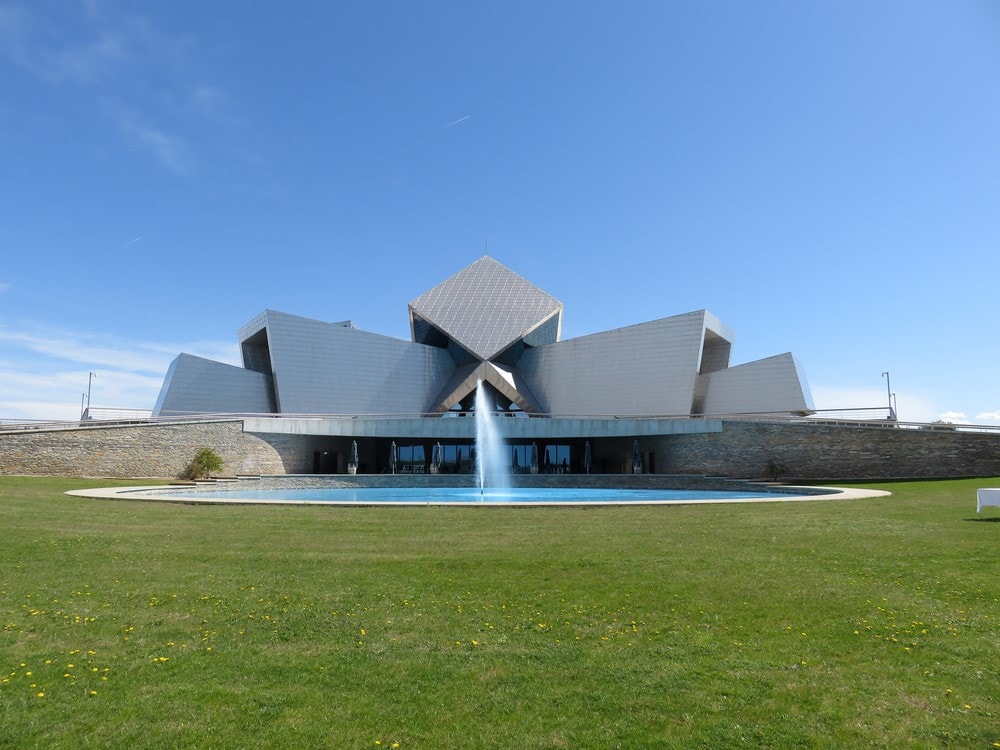
On the rest day between Alquézar and Murillo de Gállego. Rather than travelling directly, we’ll visit the spectacular vineyard of SommoS where we’ll have a tour around the vineyard, and a wine tasting before heading onto Alquézar.
Although not far as the crow flies from our home in Biescas, the weather in this area is totally different and is perfect for spring and autumn hiking.
A place that endures
The Castle of Loarre has survived so intact as the border and wars of the reconquista headed south, leaving the castle largely undisturbed. It has outlived the conflicts that gave it meaning and found new relevance through curiosity, travel and storytelling.
Whether approached through history, architecture, cinema or walking, Loarre rewards attention without demanding it. It is a place to pause, to look out across the plains, and to reflect on how landscapes shape the people and stories that pass through them.
In the end, Loarre is not just a castle to be visited, but a landscape to be understood — one step at a time.
Canyons of Ainsa
Dual level guided holiday
Explore the eastern side of the Ordesa National Park
10 - 17 May 2026


0 Comments