
The highest neolithic cave art in Spain has been found in the the Ordesa National Park. Paintings have been discovered in two caves at 2200 metres altitude, near Regufio Goriz at the base of Monte Perdido. The paintings depict human and four legged animal figures.

A four legged animal on an image enhanced by infrared
At around 7000 years old the paintings were created between 4000 - 5000 BC. Archaeologists think they were probably painted by shepherds who, even that long ago, would take their flocks to the high pastures in summer.

The two caves where the paintings were found
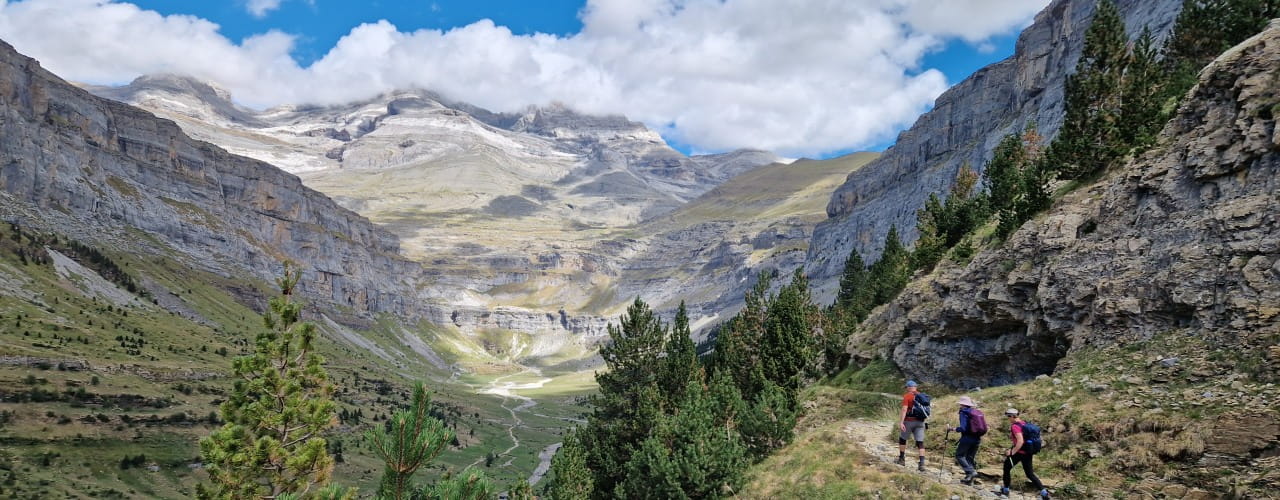
The caves are in the Valle de Goriz. This is the valley that continues along from the Ordesa Canyon , above the Cola de Caballo (horse tails waterfall). It's incredible to find them them there as it's not much more than a kilometre from Refugio Goriz which is one of the busiest huts in the Pyrenees! I've walked near the spot dozens of times and it's very close to where we hike on the Refugio Week holiday on the GR11.

In 2015, cave art was also found near Fanlo on the southern side of the park (on the road between Torla and the Añisclo Canyon). These paintings were found at an altitude of 1650 metres and were from the Levantine period (8000 BC - 3000 BC). Along with the dolmens found in the Valle de Tena and elsewhere throughout the Pyrenees is shows just how long people have been living and crossing through these mountains.

Human figure - image enhanced with infrared

Same image with no infrared
Cave paintings are more commonly found at lower altitudes and often further south in the pre-Pyrenees where I imagine the climate would have been less extreme and more bearable to live year round. The Sierra de Guara in particular is famous for it's cave art and with over 60 caves with paintings is a UNESCO world heritage site. Our hikes on the Villages of the Guara self guided holday and Riglos & Alquezar guided holiday pass by several caves with paintings of deer and humans - one dating back to 22,000 years ago!
Read more about the cave art and fossilised footprints in the Sierra de Guara.
Join Our Newsletter
Get updates when we publish new blog articles and information about the Pyrenees
Snowshoeing holiday
22 February - 1 March 2026
Discover the magic of the Pyrenees in winter with this two centre guided snowshoeing holiday
The Ordesa NP
Guide to hiking the spectacular canyons of the Ordesa National Park
Bearded vulture
This huge bone eating vulture is one of the Pyrenees emblamatic species
0 Comments